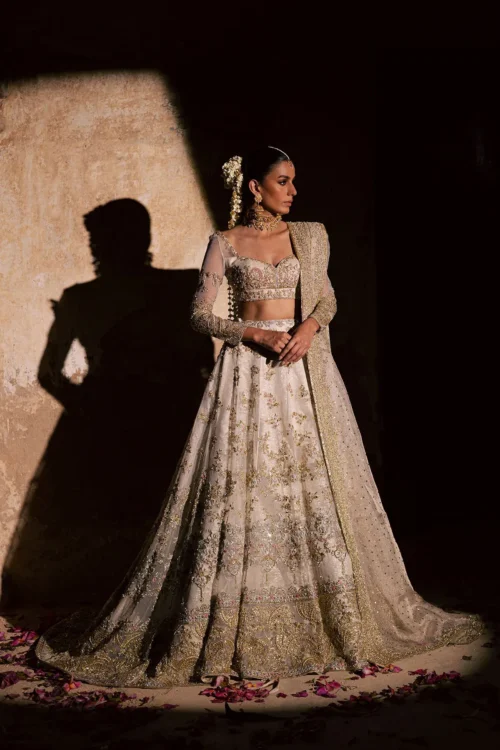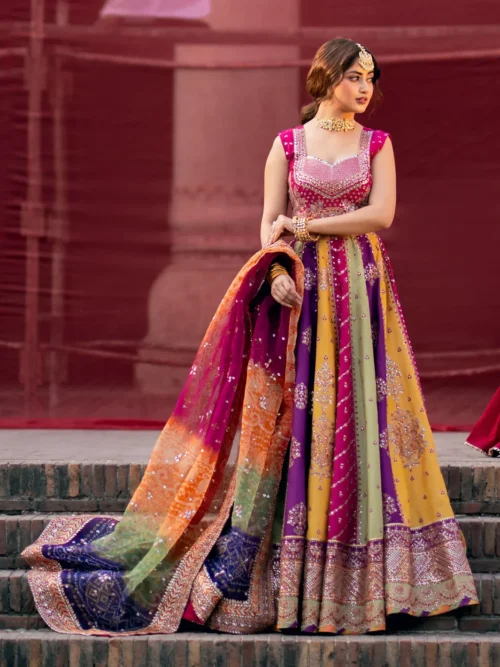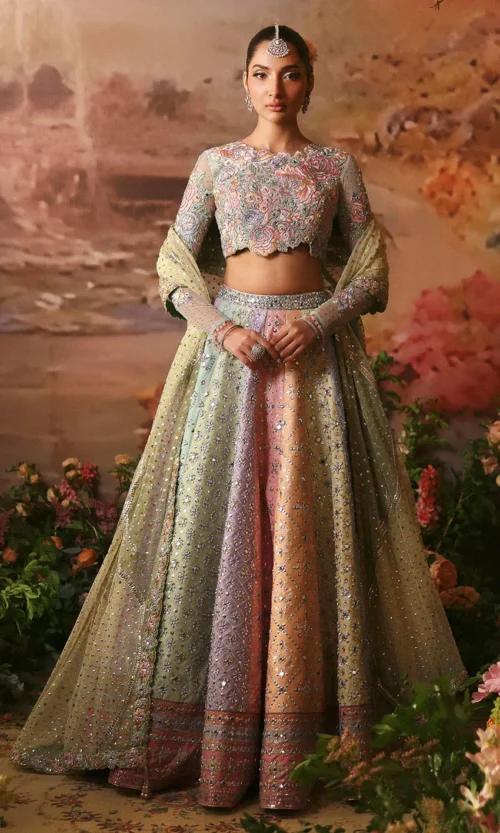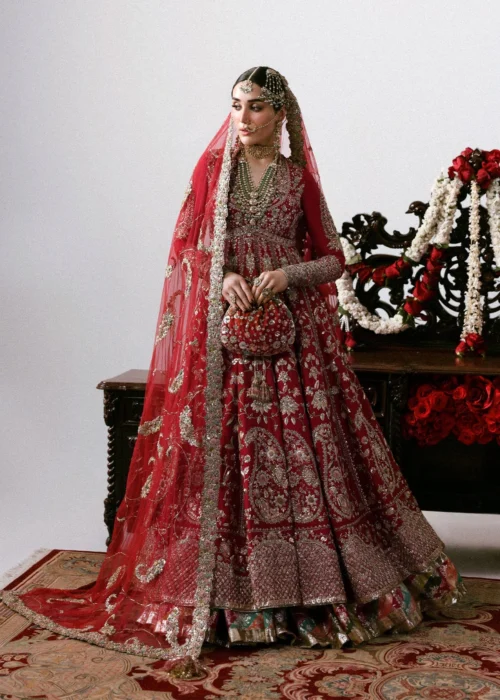
Pakistani Wedding Dress for Bride: Silhouette & Fabric
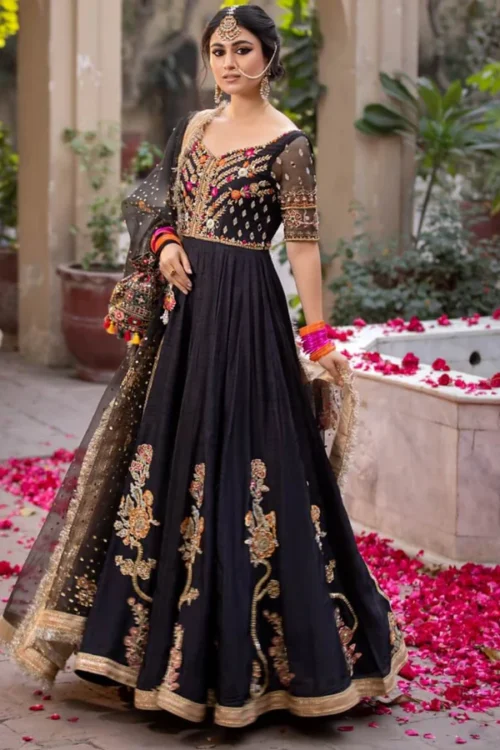
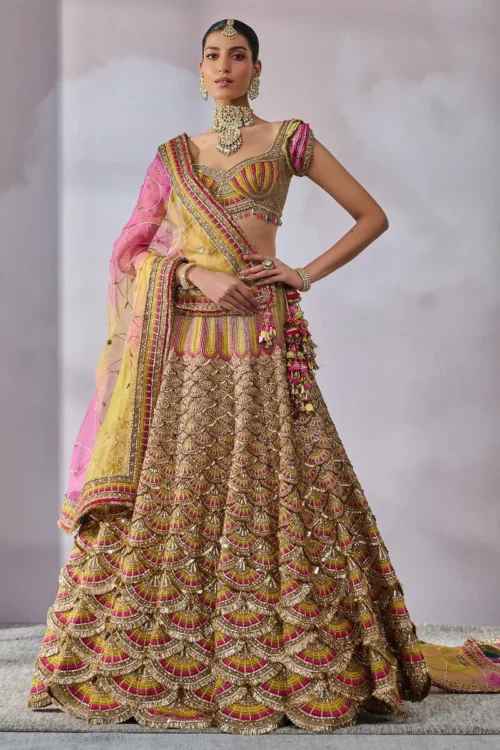
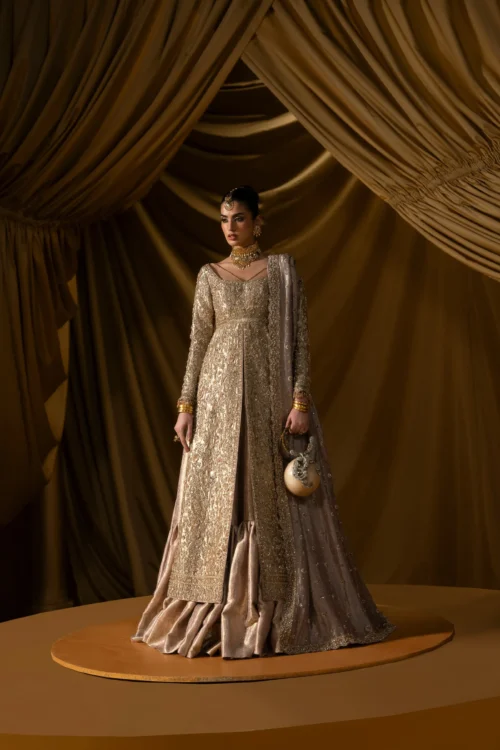
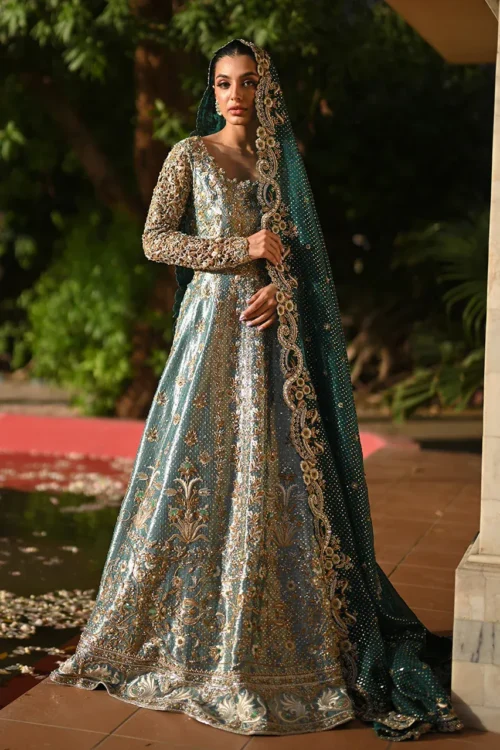
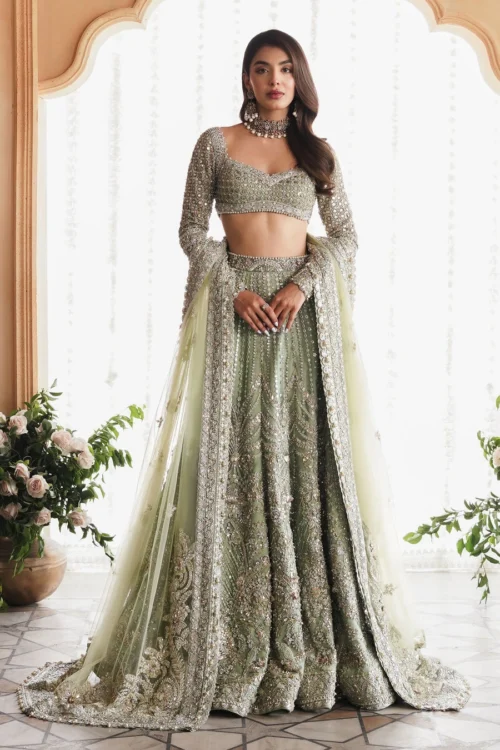
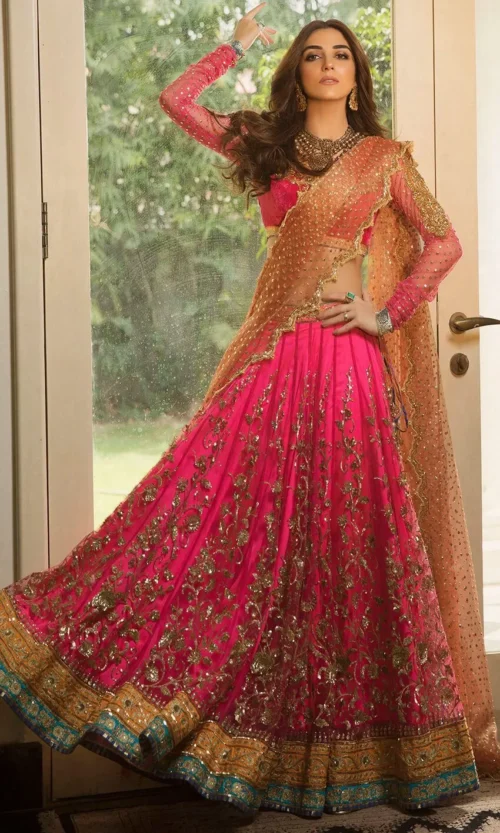
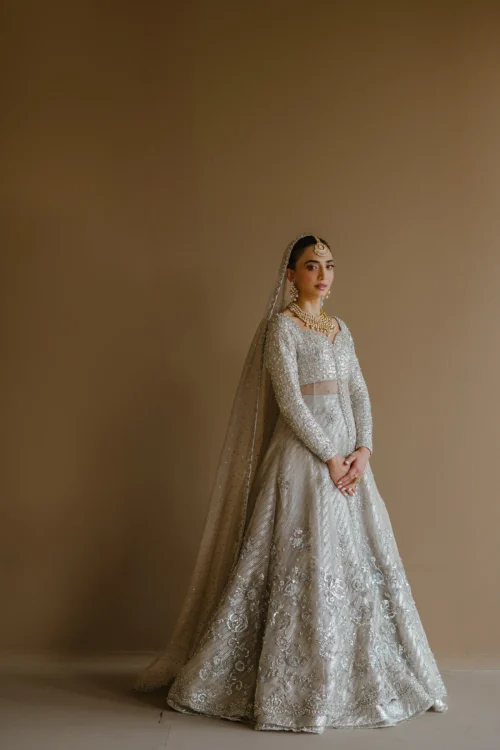
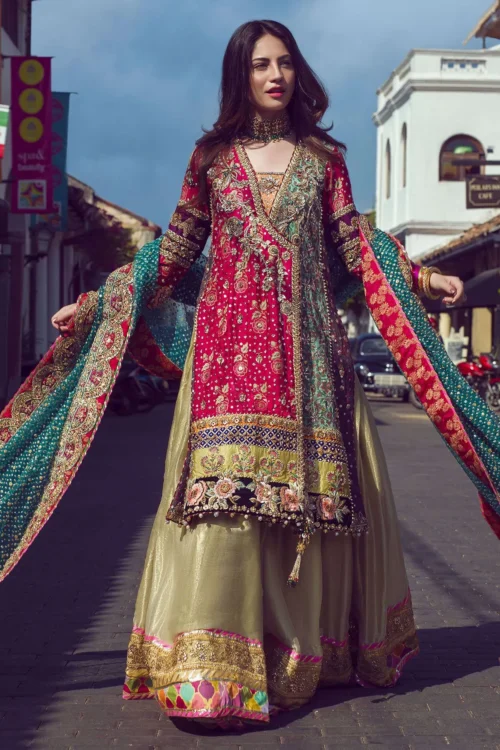
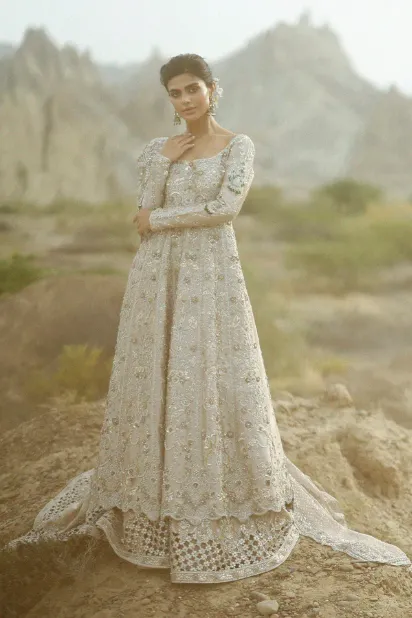
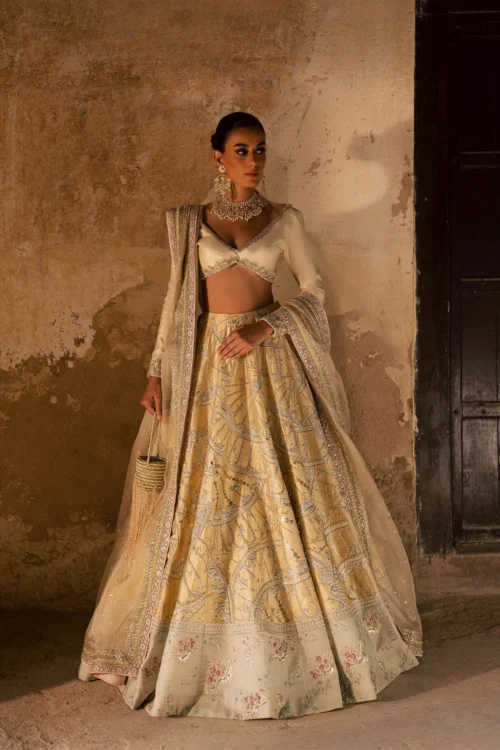
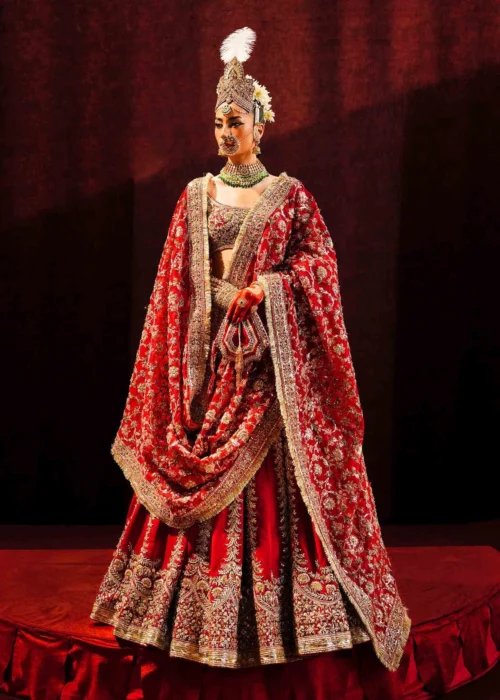
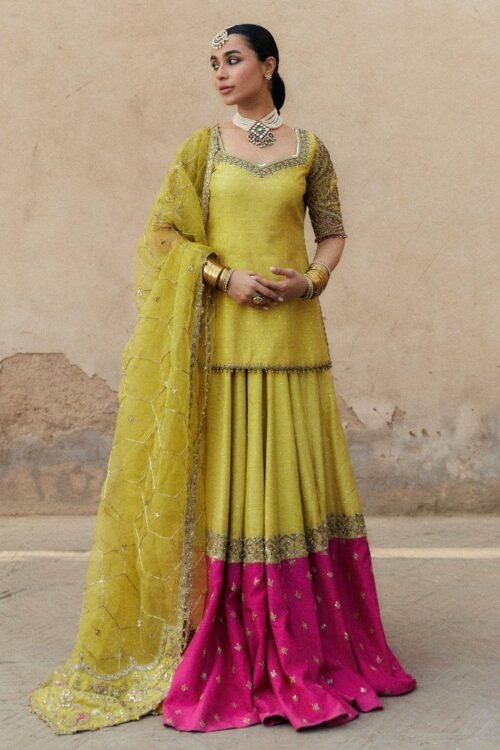
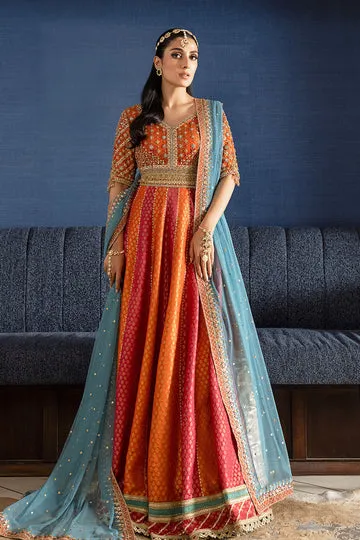
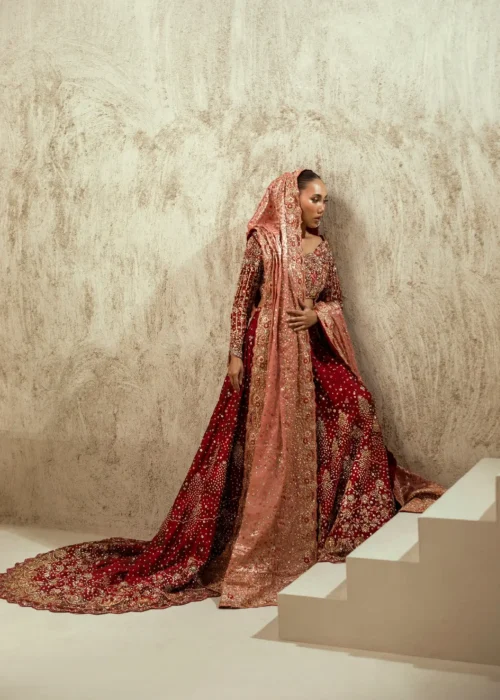
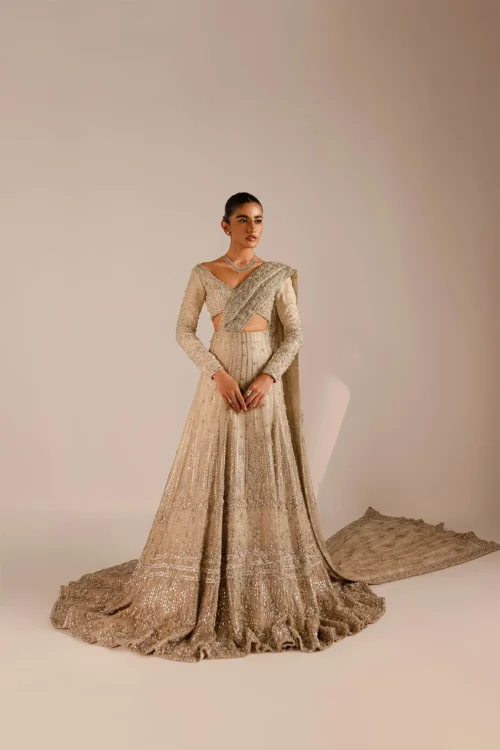
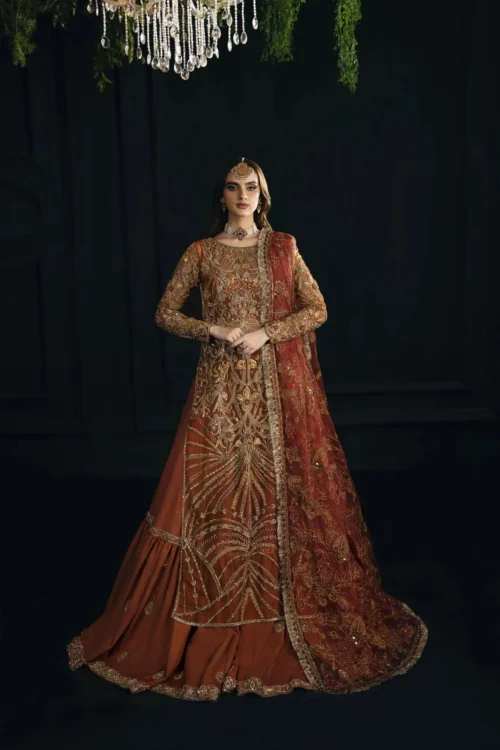
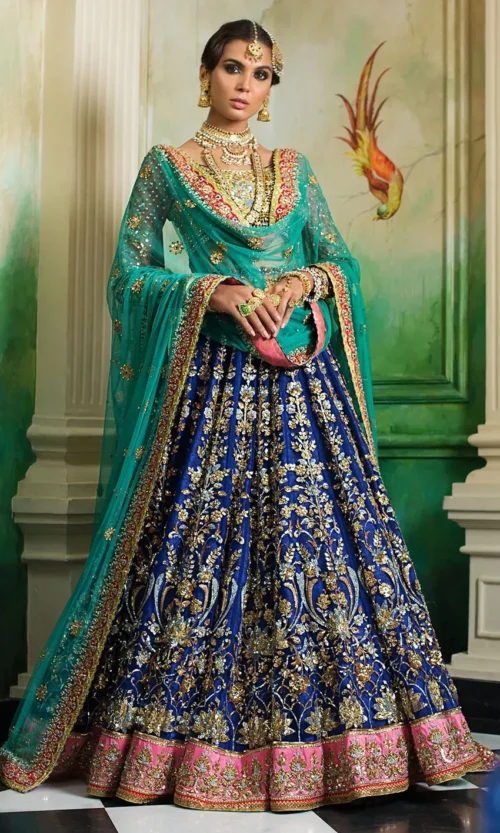
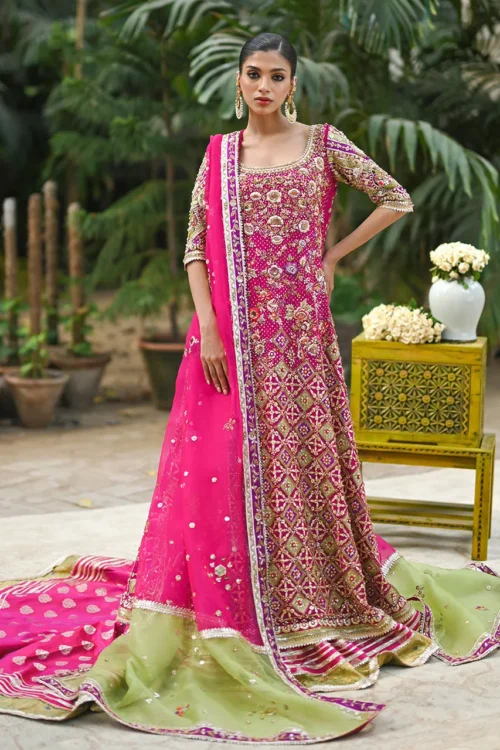
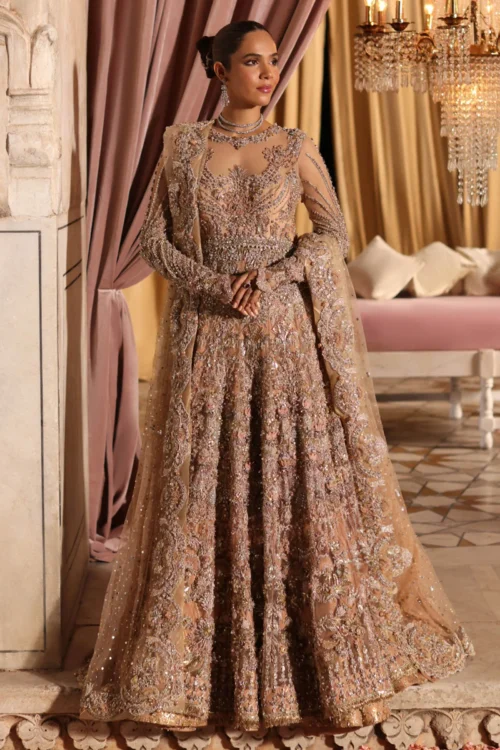
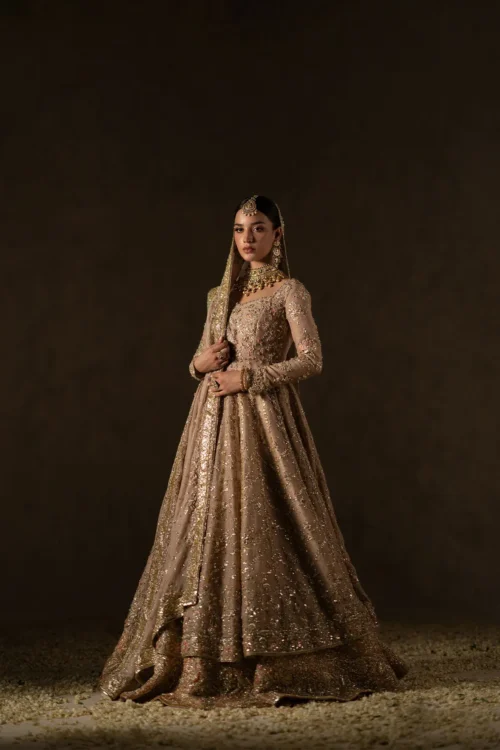
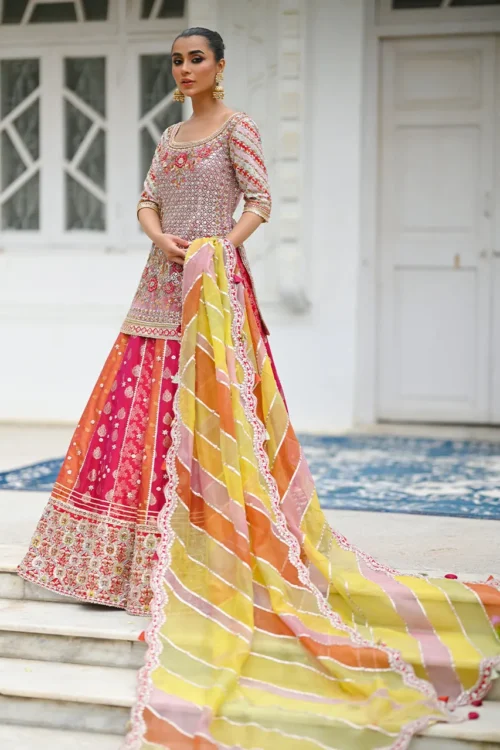
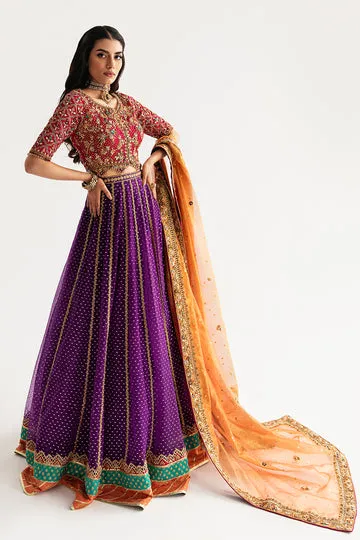
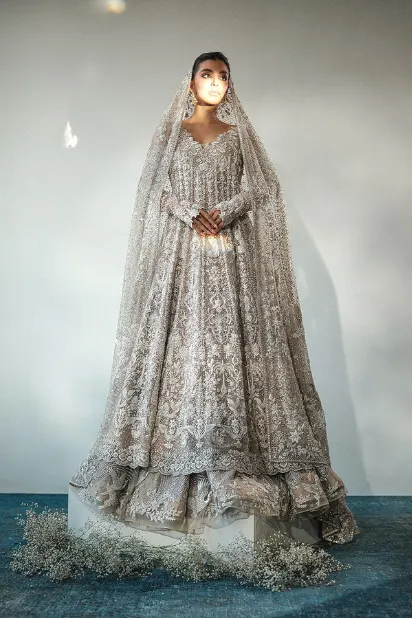
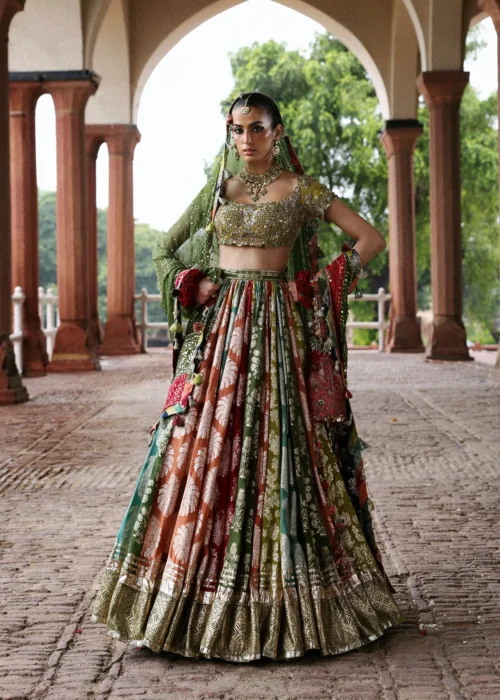
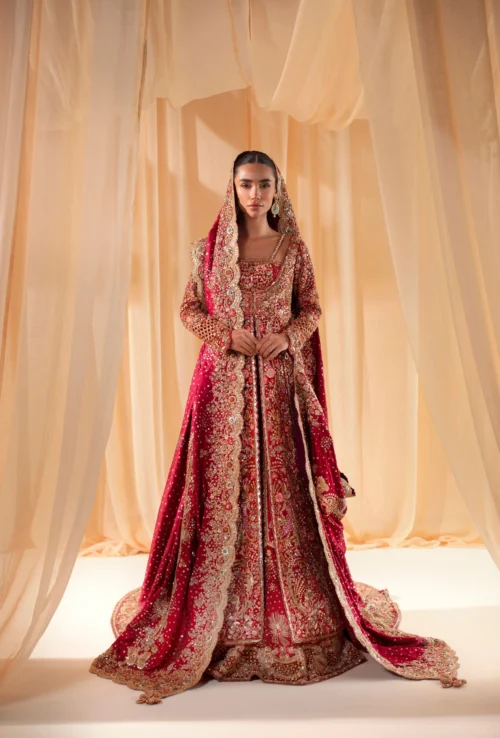
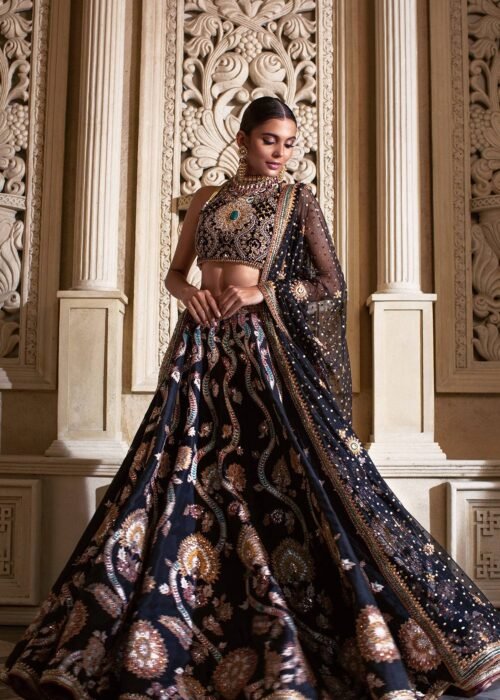
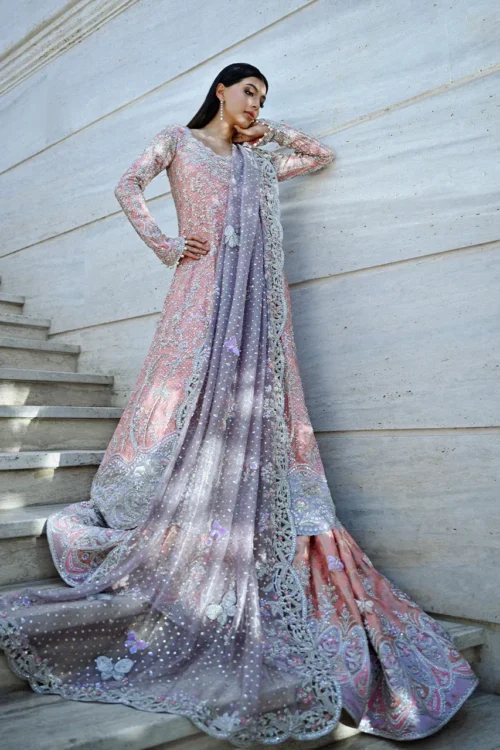
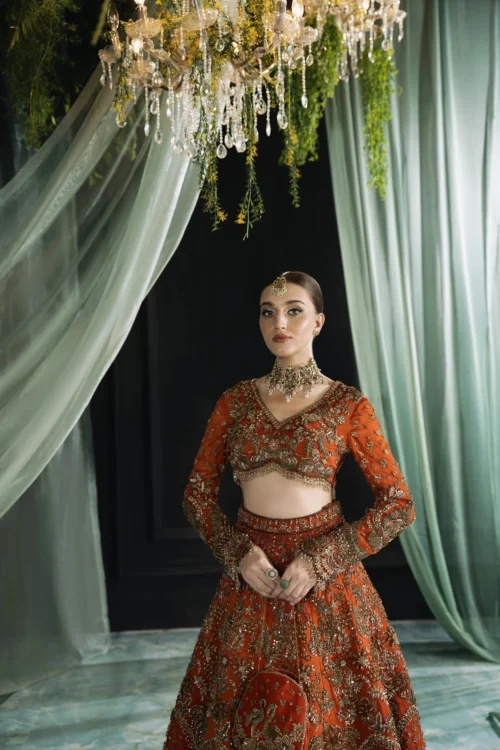
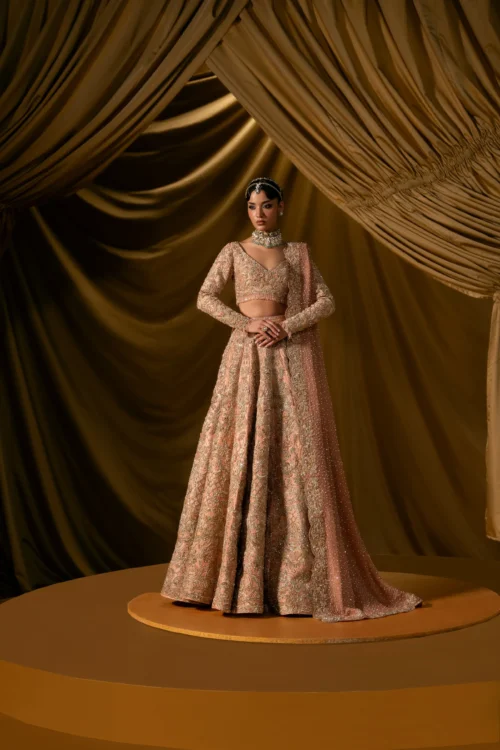
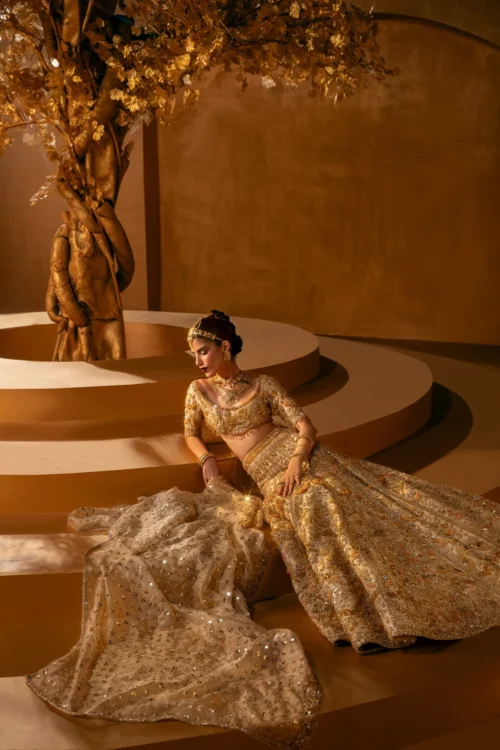
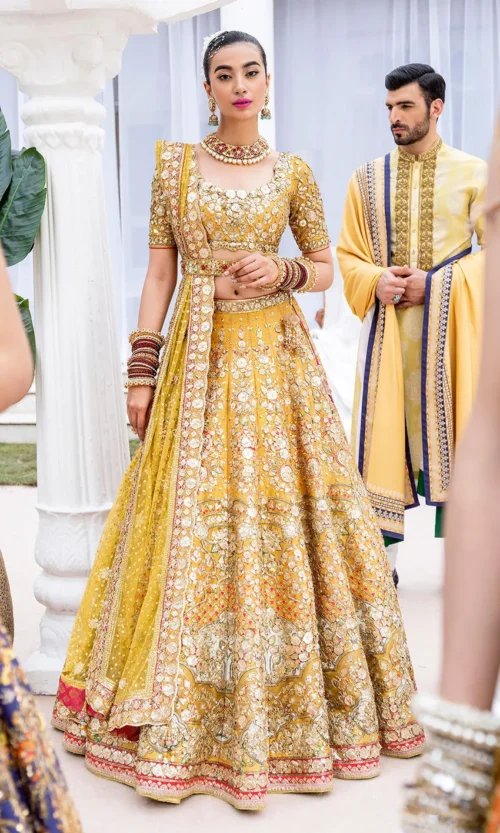
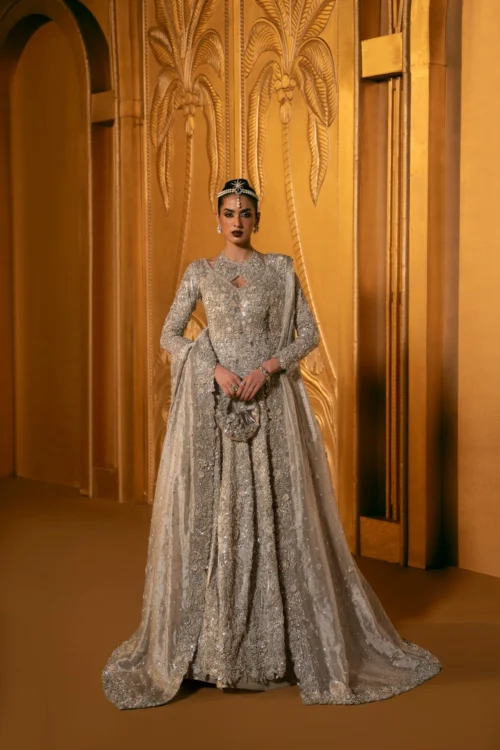
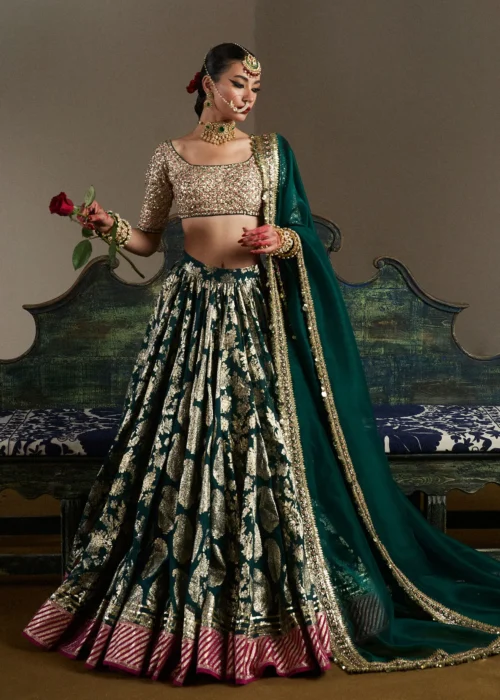
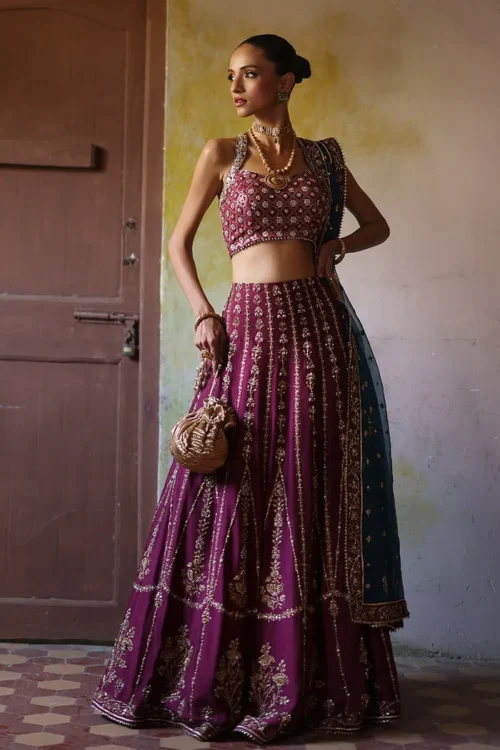
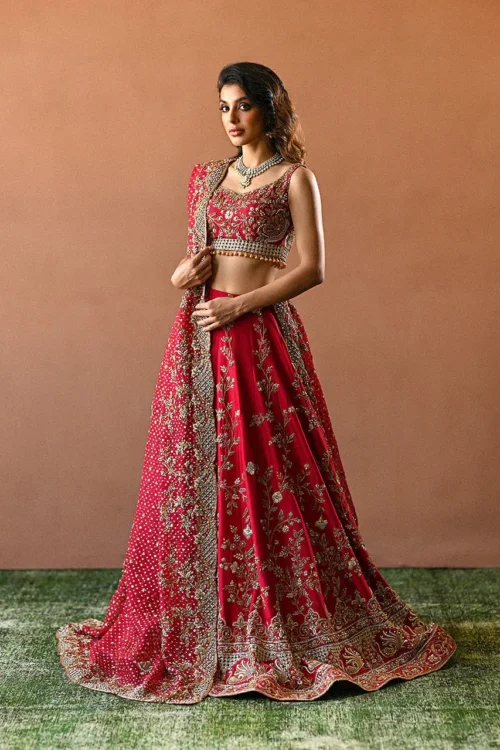
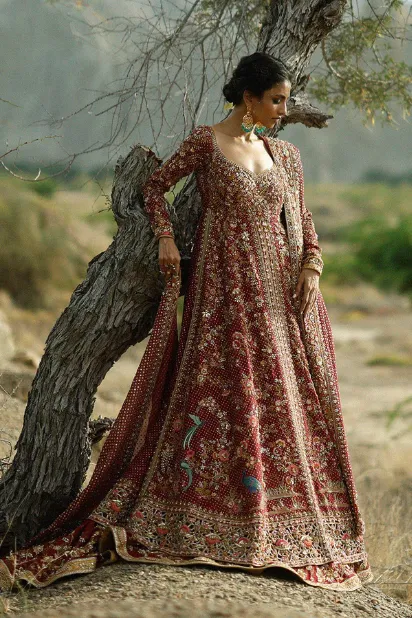
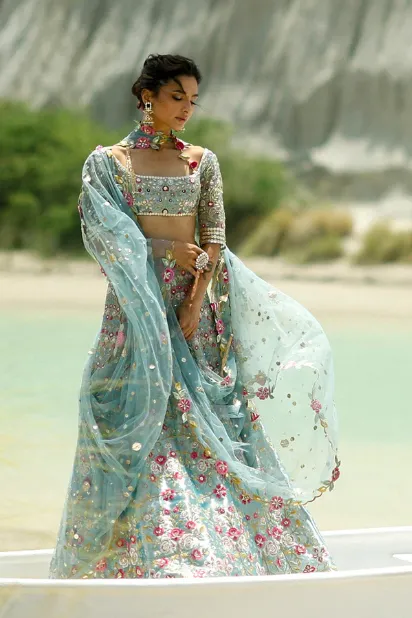
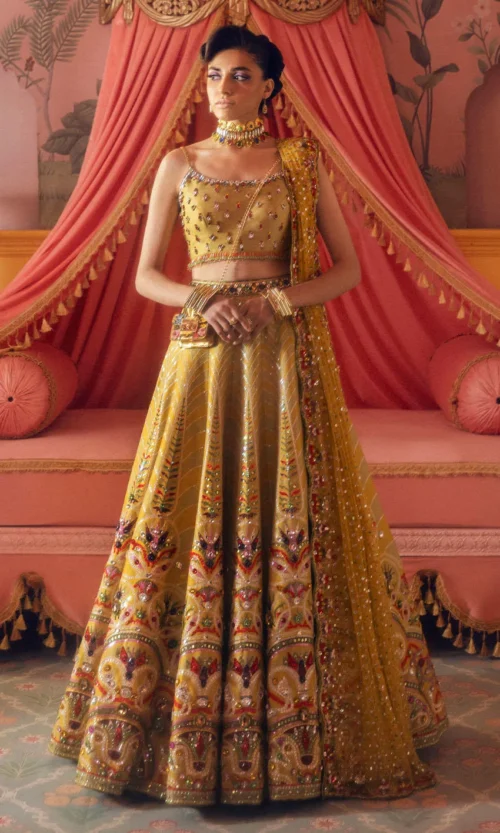
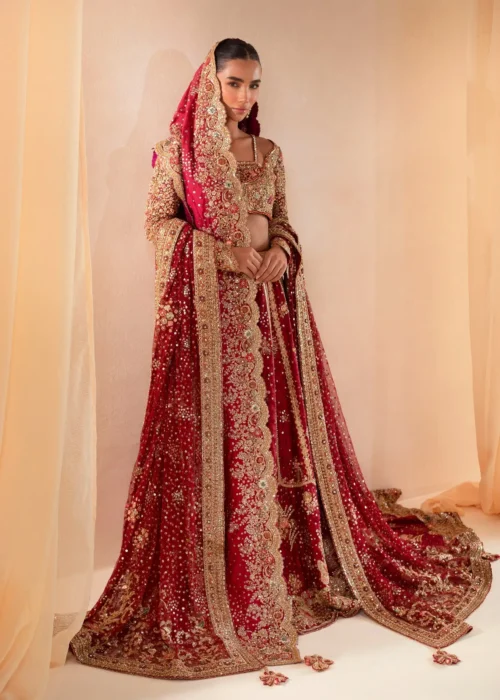
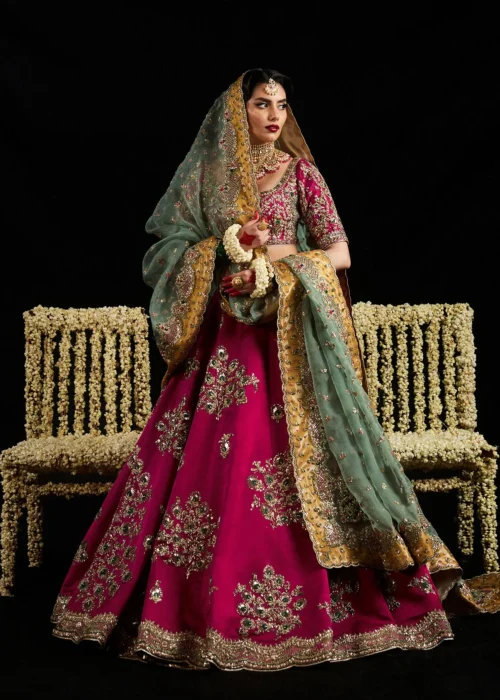
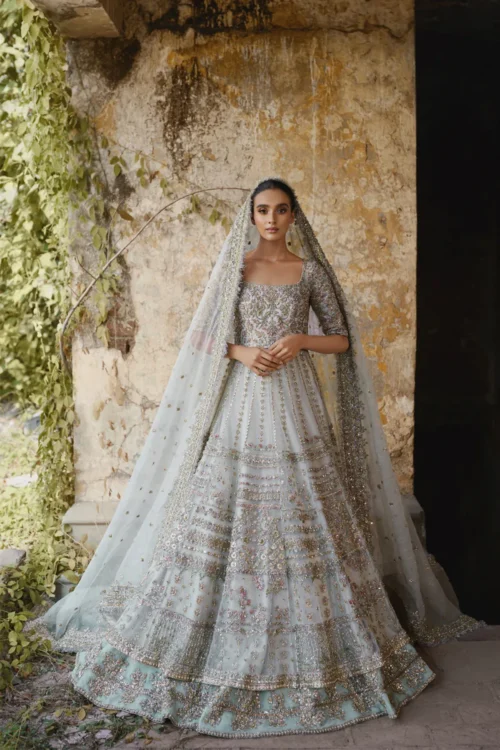
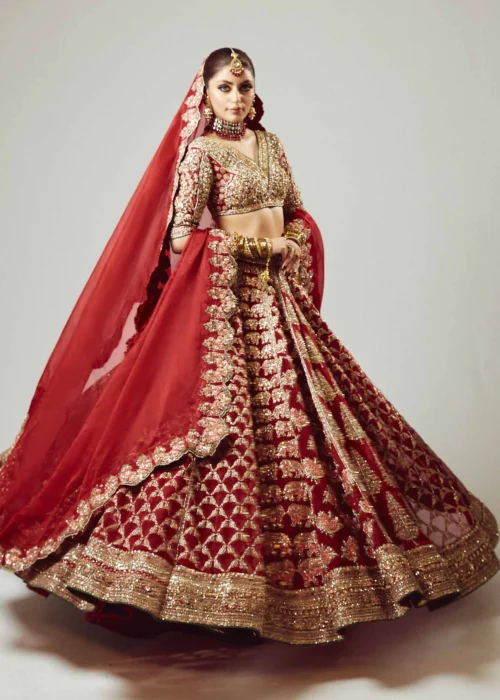
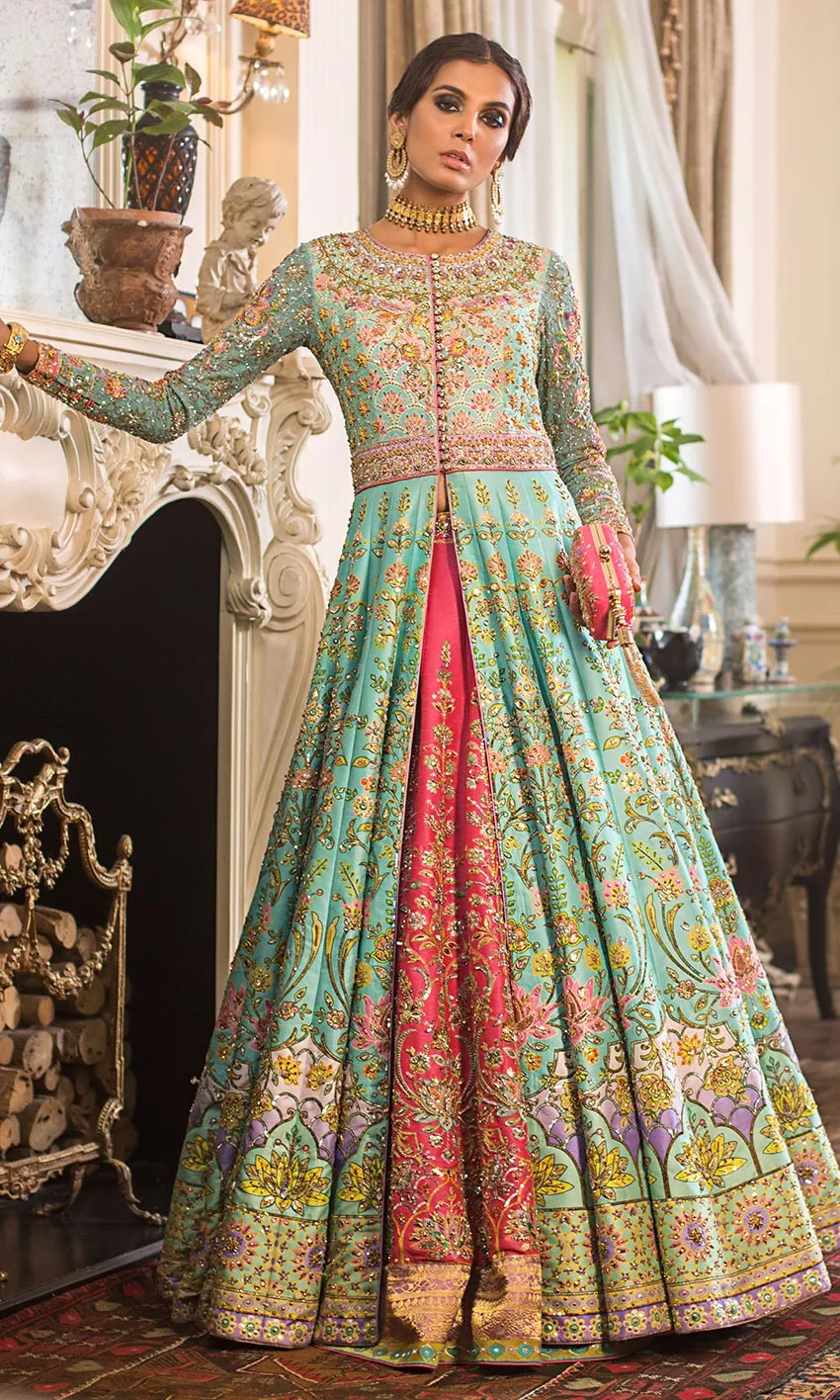
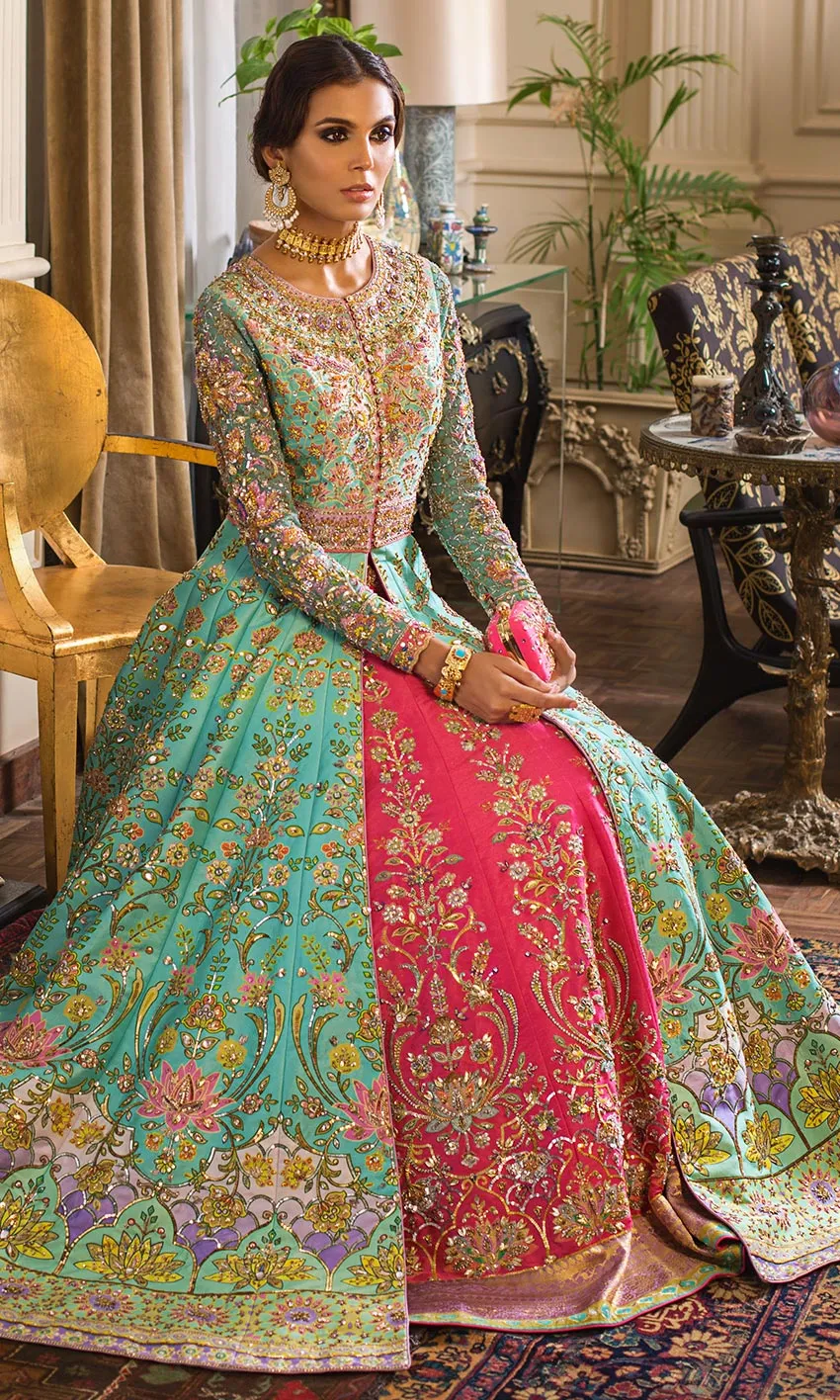
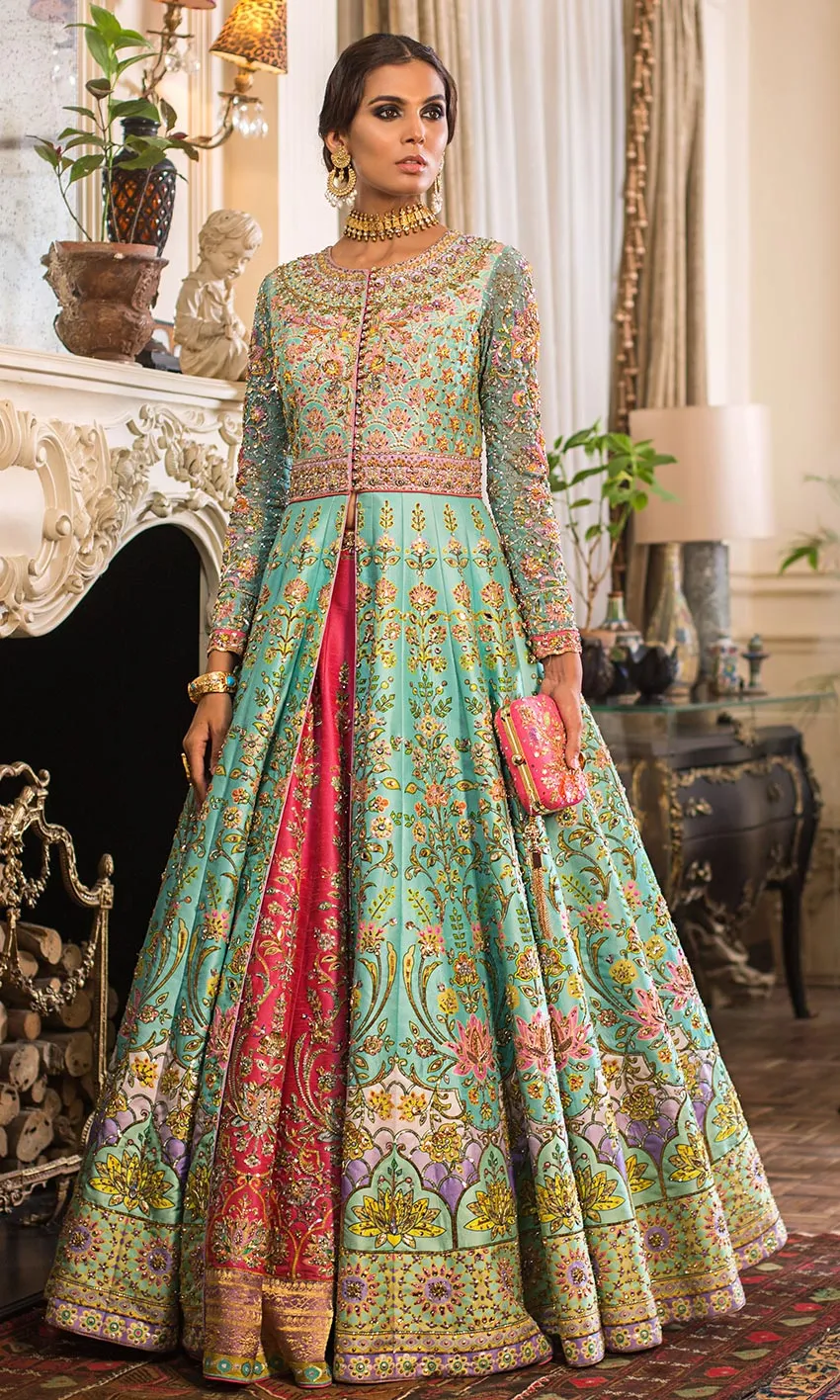
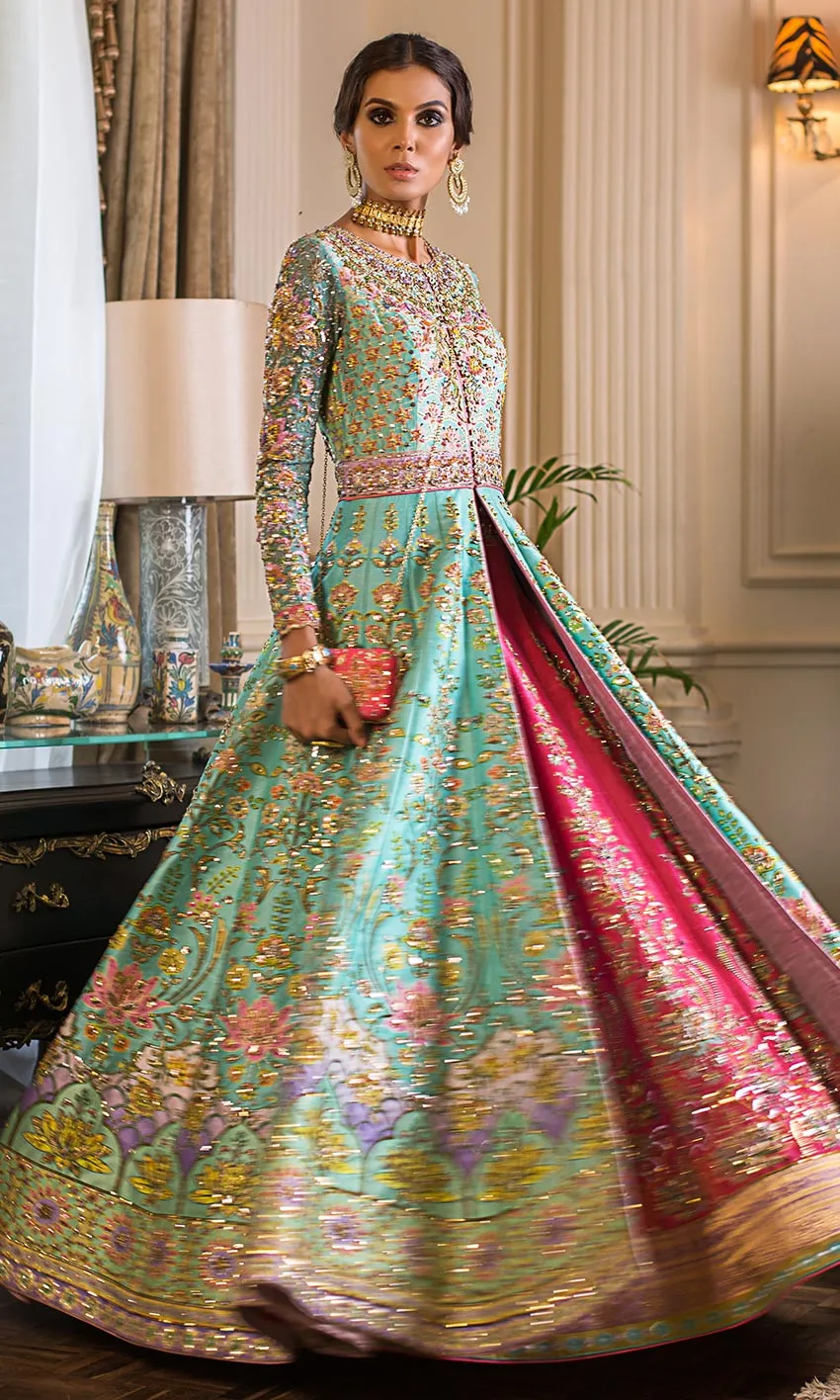
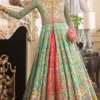
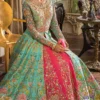
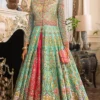
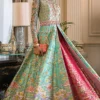
This Pakistani wedding dress for bride is one of the most architecturally ambitious pieces to emerge from the HBO Multan Atelier — an open-front silk anarkali worn over a full farshi lehenga, the two layers moving in opposition as the bride walks. The outer anarkali is cut from pure teal silk, its surface entirely covered in hand-worked Zardozi gold-thread clusters, polychrome Resham floral sprays, and Sheesha mirror accents that catch light across every panel from shoulder to hem. Beneath it, a deep fuchsia raw silk lehenga carries its own full embroidery field in complementary tones — visible through the open front of the anarkali and sweeping to the floor in a farshi silhouette.
The colour palette — aqua teal over fuchsia, with gold, yellow-green, lavender, and coral Resham fills — is a deliberate departure from the conventions of the red bridal canon. For the bride seeking a Pakistani wedding dress that reads as singular rather than traditional, this composition delivers that distinction without sacrificing the ceremonial weight the Barat demands. The lotus-medallion border running the full circumference of the lehenga hem is worked in graduated tones of green, lavender, and gold, framing the skirt’s movement and grounding the overall palette.
This design belongs to our bespoke bridal lehenga collection, which spans the full spectrum of Barat silhouettes — from structured farshi lehengas to open-front anarkali compositions such as this one. Brides considering complementary ceremony attire may also explore our nikkah dress for bride and mehndi dress pakistani collections, each crafted under the same Atelier standard.
The Atelier’s Craft: Zardozi, Resham & Sheesha Embellishment
Every surface of this Pakistani wedding dress for bride is a record of hours. The bodice is the most densely worked section — Zardozi gold-wire coiling surrounds each Resham floral medallion, with Sheesha mirror pieces stitch-set by hand into the centres of the principal motifs across the front panel and sleeves. The cuffs carry a continuous Resham vine with individual petal fills in silk thread, terminating at a Tilla gold-couched border at the wrist. This level of hand-embellishment is not accelerated by machine at any stage — each section is completed by a single Master Artisan who carries the pattern in memory from the previous piece.
The skirt’s full-field Resham coverage follows a structured grammar: climbing vine columns on the fuchsia underlayer, lotus medallion repeats on the teal outer skirt, and a border composition that integrates Dabka wire couching, Nakshi floral outlines, and Zardozi accent clusters. The embroidery weight is calibrated to the silk’s drape — heavier toward the hem to assist the farshi sweep, lighter at the waist to maintain silhouette. Master Artisans at the Multan Atelier have practised this calibration across decades; it cannot be replicated by weight calculation alone.
Bespoke Customization & Fit
Every Pakistani wedding dress for bride commissioned through HBO is built from a measurement set unique to that bride. Thirty-seven body measurements are taken remotely via WhatsApp, using our illustrated measurement guide that has been refined over hundreds of international orders. For an open-front anarkali over lehenga, fit at the bodice, anarkali length, and waist transition point is particularly critical — all three are individually measured and confirmed before cutting begins.
Progress photographs are shared at three Atelier milestones: fabric cut and placement, embroidery completion, and pre-dispatch inspection. Our 100% Bespoke Fit Guarantee applies to every international order regardless of destination. Each garment ships with seam allowance retained at all critical junctions — bodice side seams, anarkali hem, and lehenga waistband — for local adjustment if required. Color customization, silhouette modification (lehenga width, anarkali length), and embellishment density changes are all available at consultation stage.
Worldwide Delivery & Garment Care
Standard crafting timeline for this Pakistani wedding dress for bride is 8 to 12 weeks from measurement confirmation, reflecting the density of hand-embellishment across both layers. Dispatch is via insured international courier with full end-to-end tracking coordinated via WhatsApp. The garment ships in a structured garment bag with tissue interlining between the anarkali and lehenga layers. For Eid-ul-Adha 2026 delivery, consultation must begin by May 10, 2026. On receipt, store flat or on a padded hanger; dry-clean only; avoid prolonged direct light to preserve Resham thread pigment and Sheesha mirror adhesion.
Frequently Asked Questions
Can I customize the color of this Pakistani wedding dress for bride?
Yes. The teal and fuchsia palette shown is the Atelier’s signature composition for this design, but HBO accepts full color commissions at consultation stage. Alternate base colors for the anarkali layer — ivory, sage, blush, or deep emerald — can be paired with a contrasting or tonal underlayer lehenga. Resham thread palettes are matched to the chosen base at the Atelier. Color requests must be confirmed before cutting begins; no changes are possible after fabric is cut. All color customizations are discussed and approved via WhatsApp consultation before any commitment is required.
How is this Pakistani wedding dress shipped to the USA or UK?
All HBO orders ship via insured international courier — DHL or FedEx — with full customs documentation prepared by the Atelier. The garment travels in a structured garment bag with tissue interlining to prevent embellishment contact between layers. End-to-end tracking is shared via WhatsApp from dispatch to delivery. Duties and import fees applicable in the USA and UK are the responsibility of the recipient; our team provides guidance on estimated duty values at consultation. Delivery timelines from dispatch are typically 5 to 10 business days to the USA, UK, Canada, UAE, and Australia.
What embroidery techniques are used in this Pakistani wedding dress for bride?
This Pakistani wedding dress for bride is embellished using five Multan Kari techniques applied entirely by hand: Zardozi (gold-wire coiling around principal motifs), Resham (polychrome silk thread floral fills across both layers), Sheesha mirror work (hand-stitch-set glass pieces in bodice medallion centres), Dabka (wire coil couching along hem borders), and Nakshi (fine outline embroidery defining the lotus and floral motifs). No machine embroidery is used at any stage. The technique for each section is selected by the Master Artisan based on fabric weight, motif scale, and the bride’s embellishment brief.