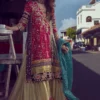

Pakistani Mehndi Lehenga — The Angharka Silhouette in Crimson Raw Silk
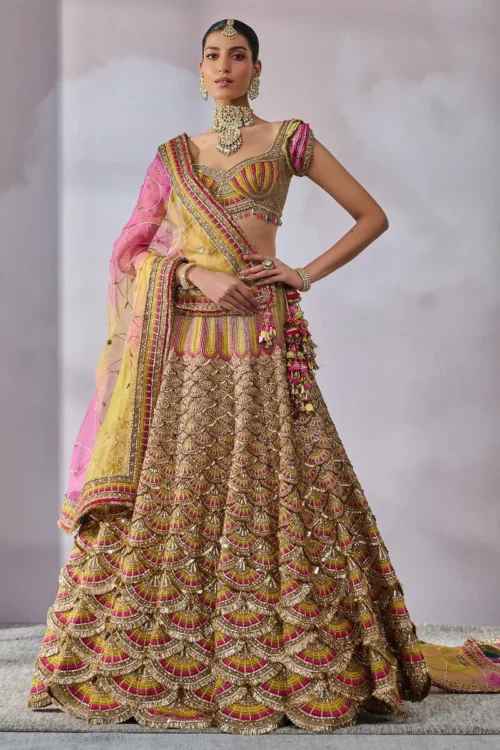
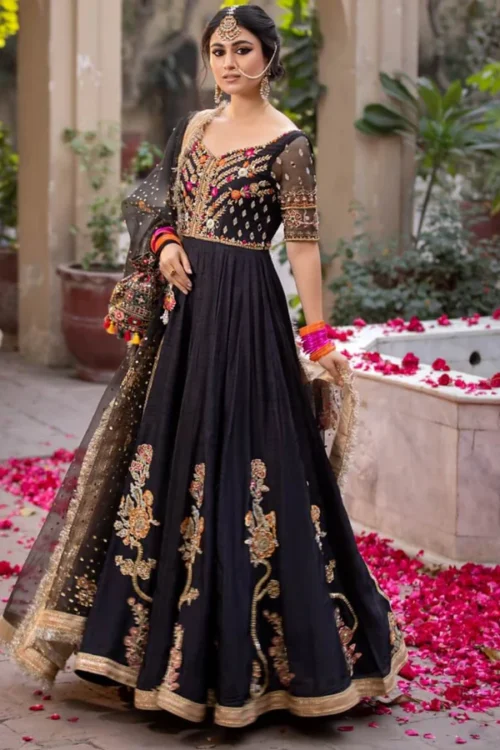
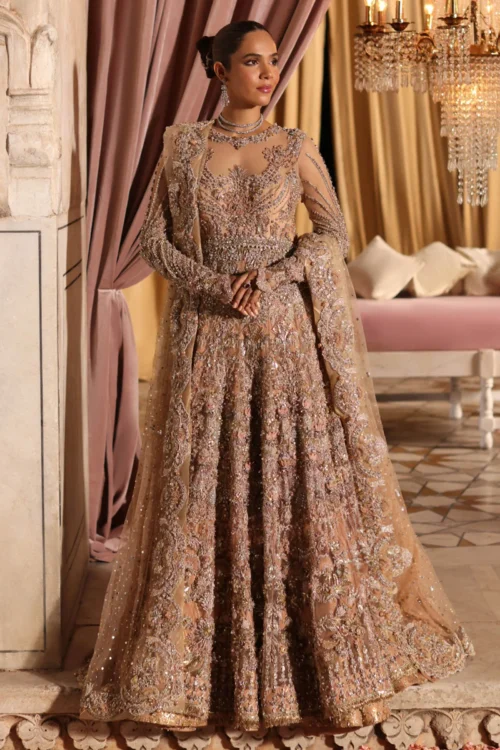
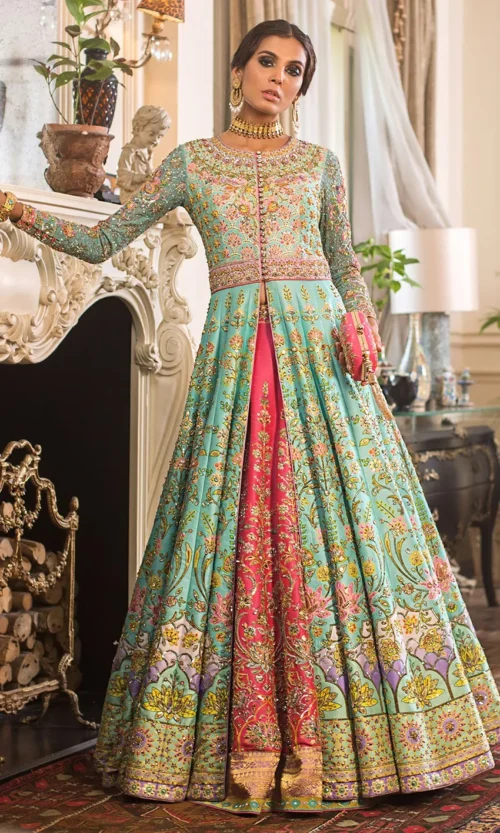
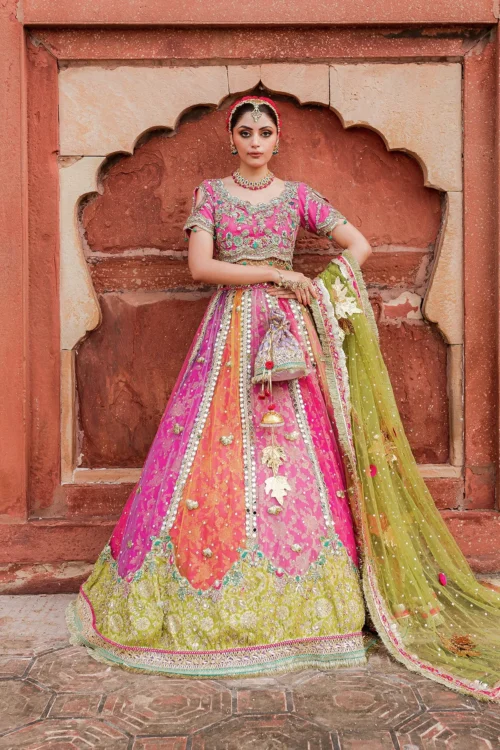
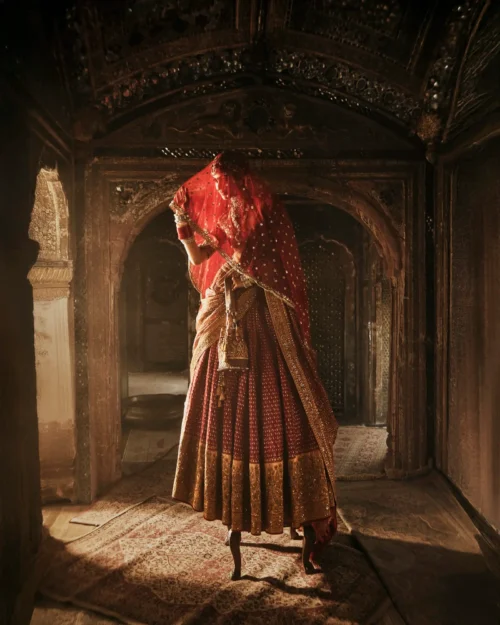
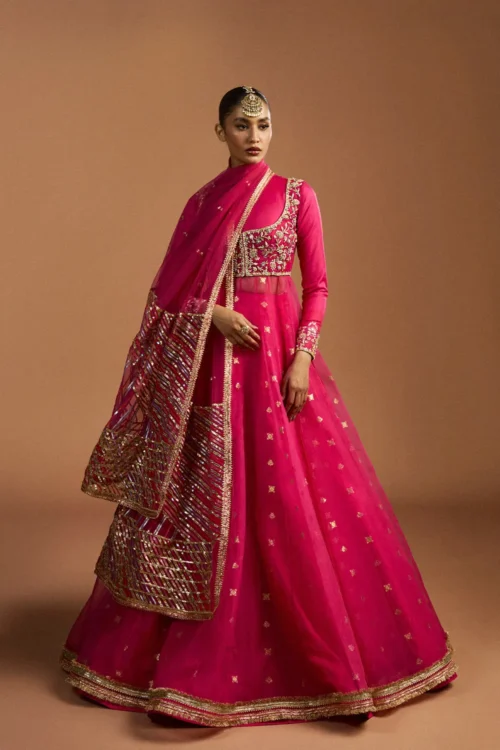
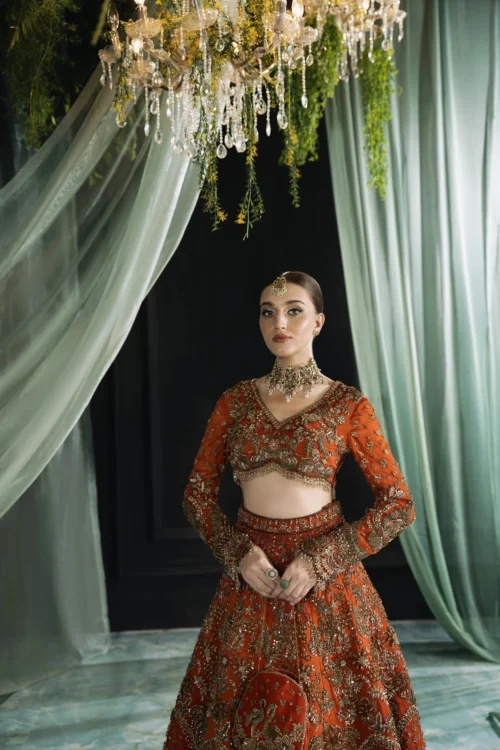
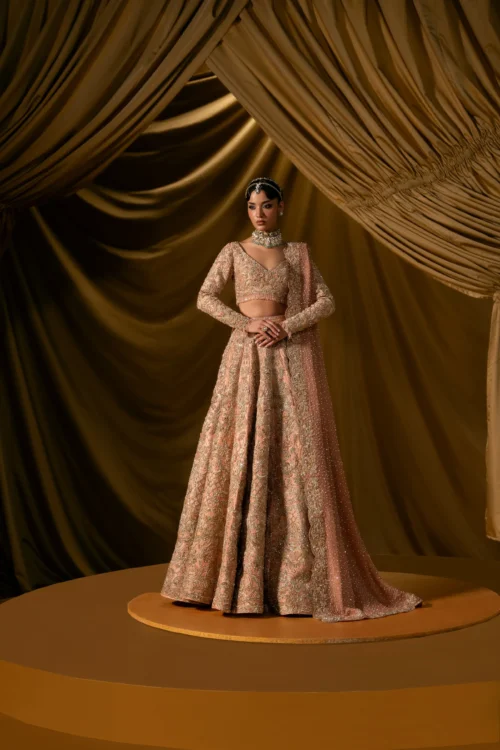
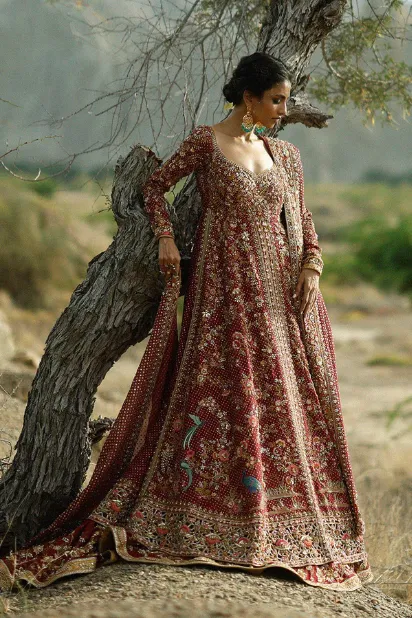
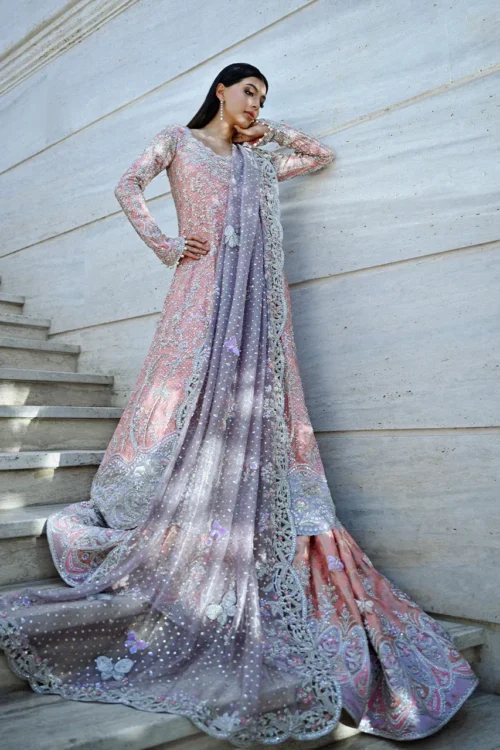
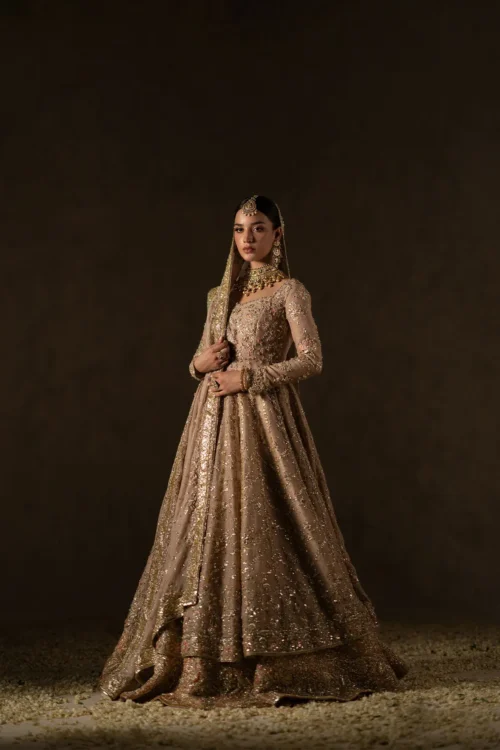
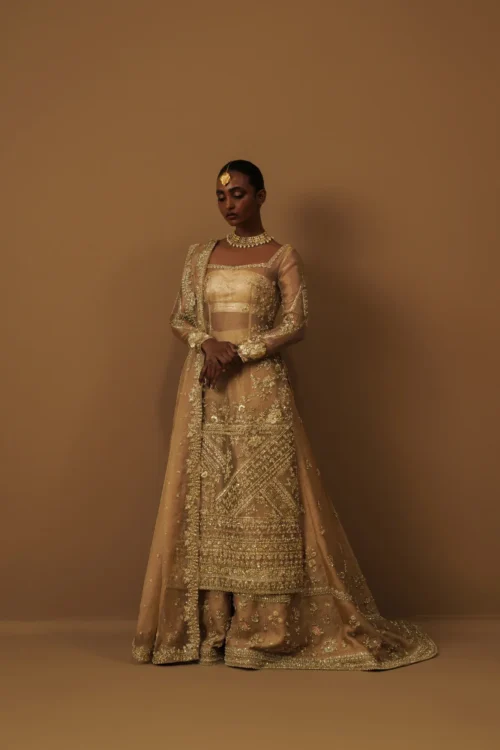
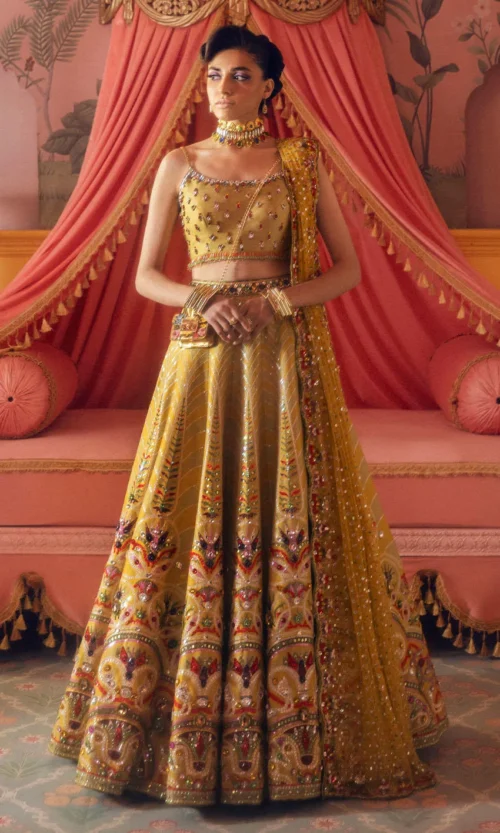
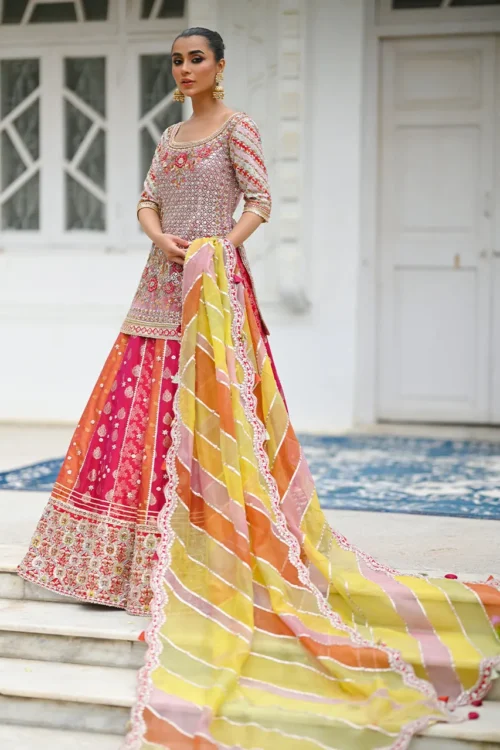
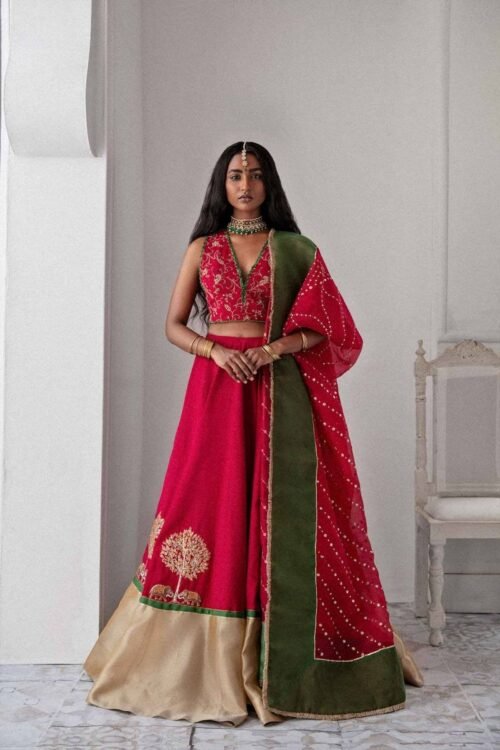
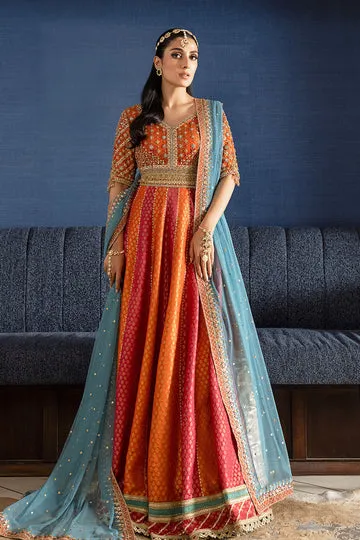
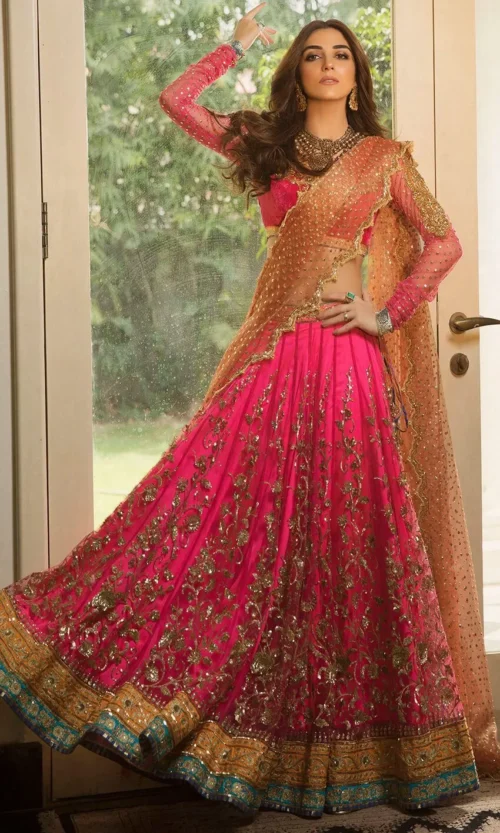
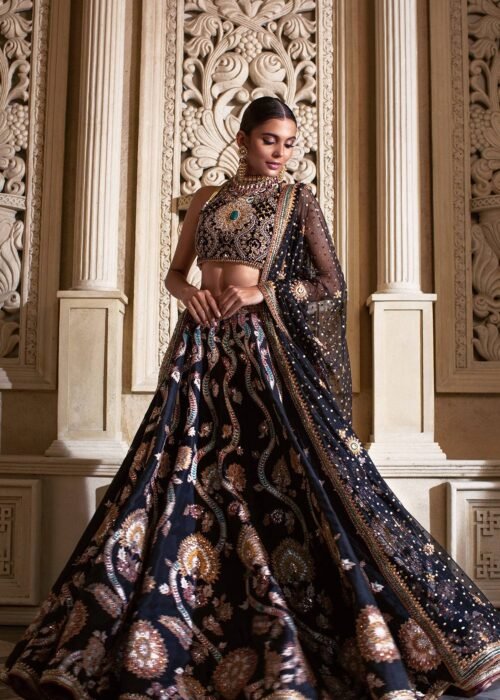
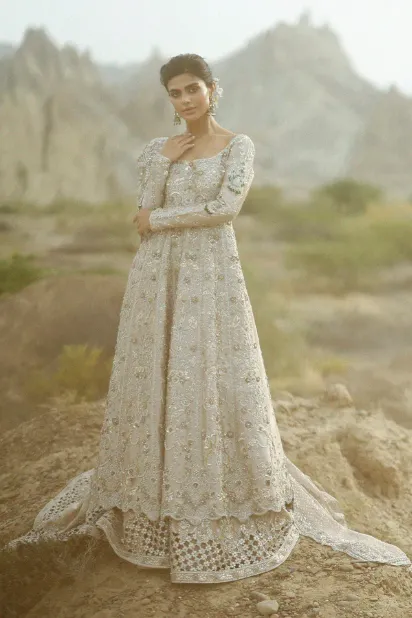
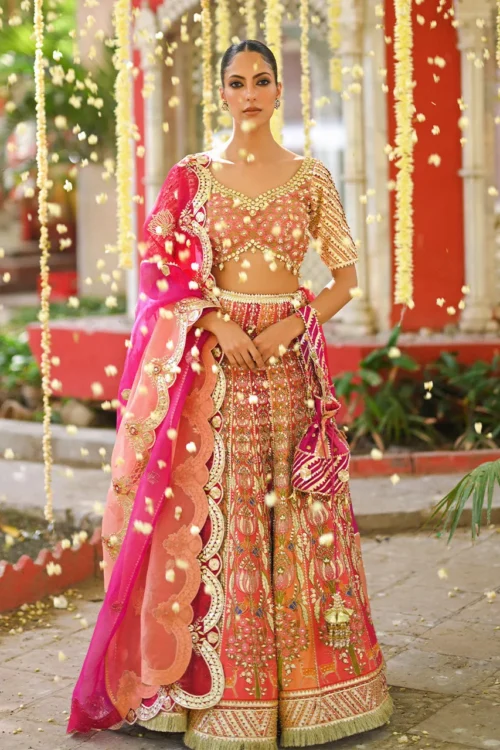
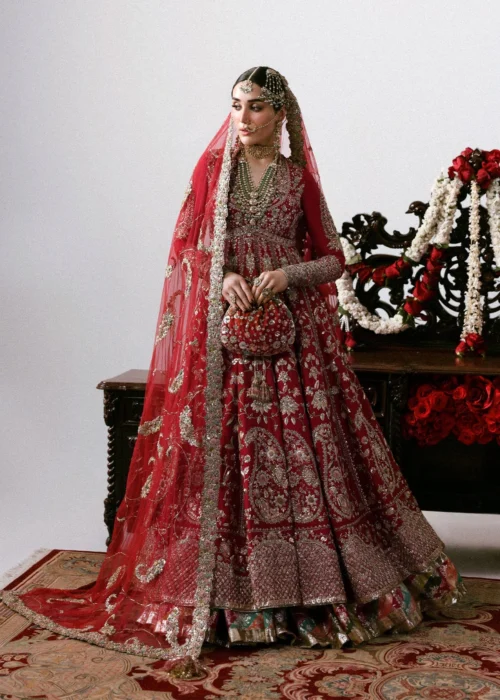
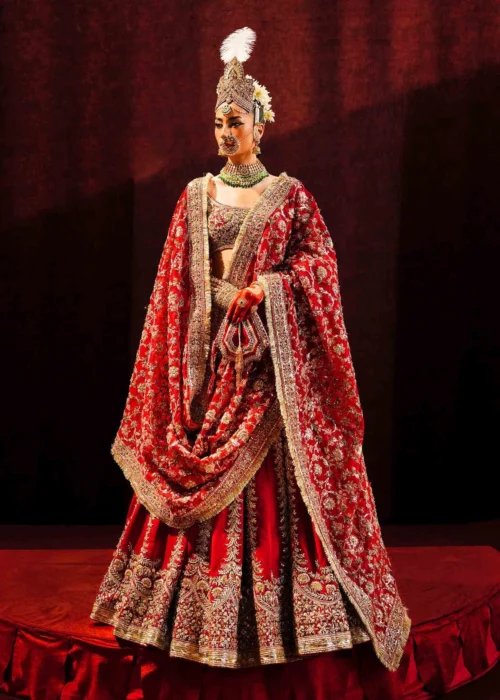
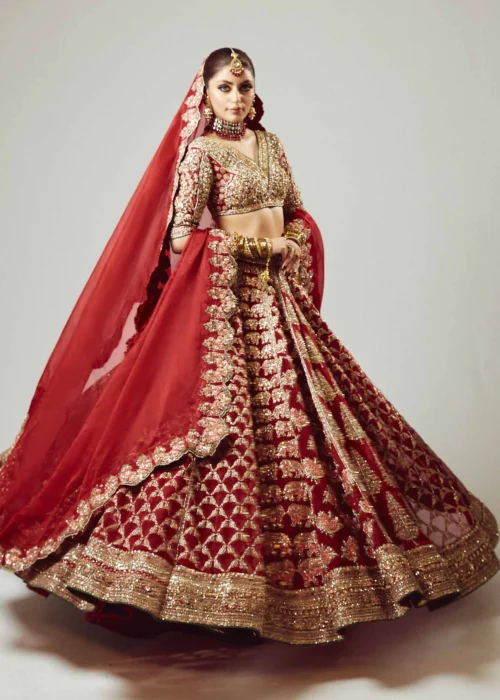
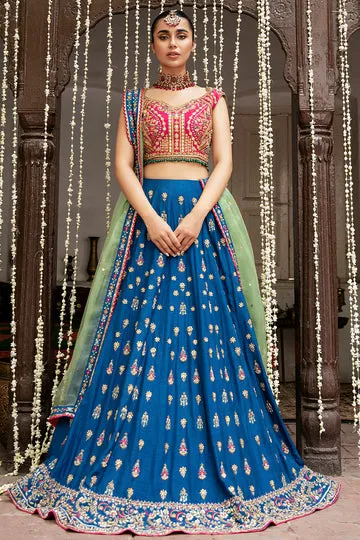
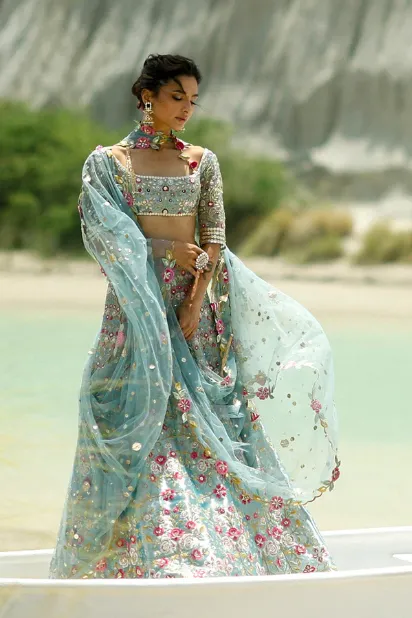
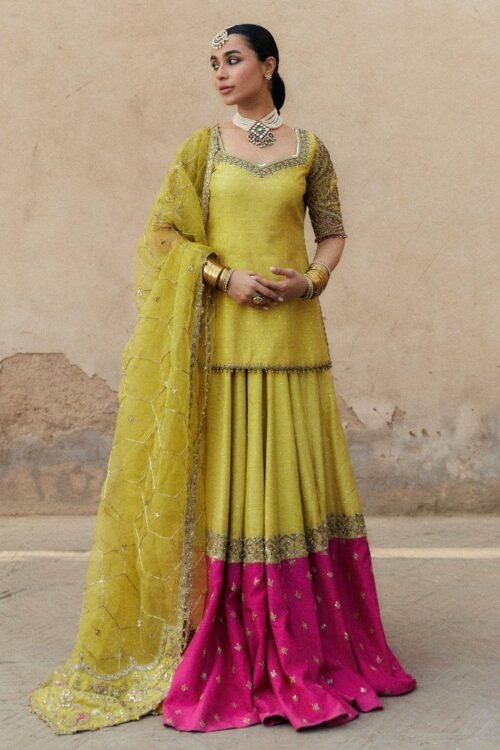
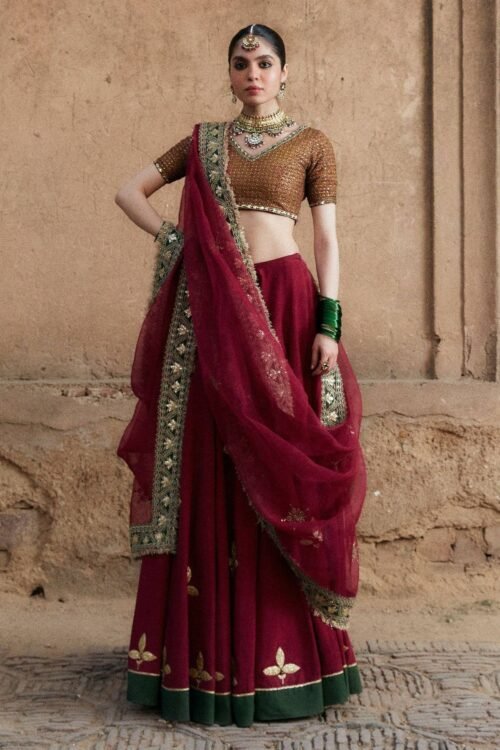
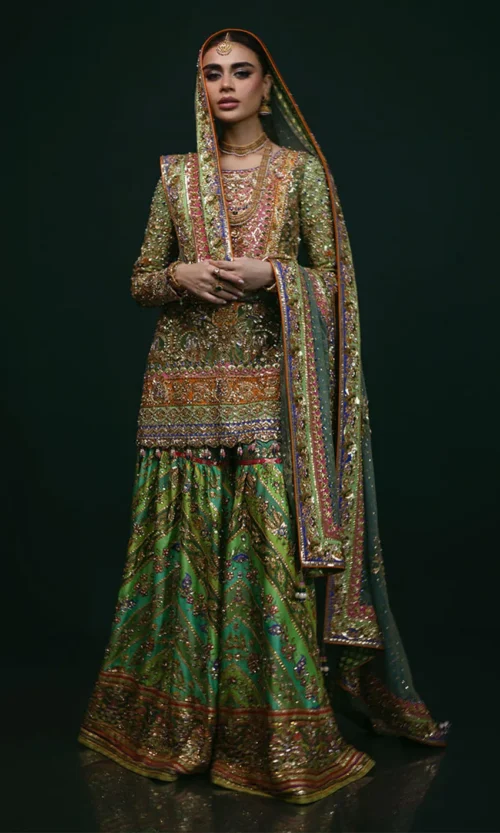
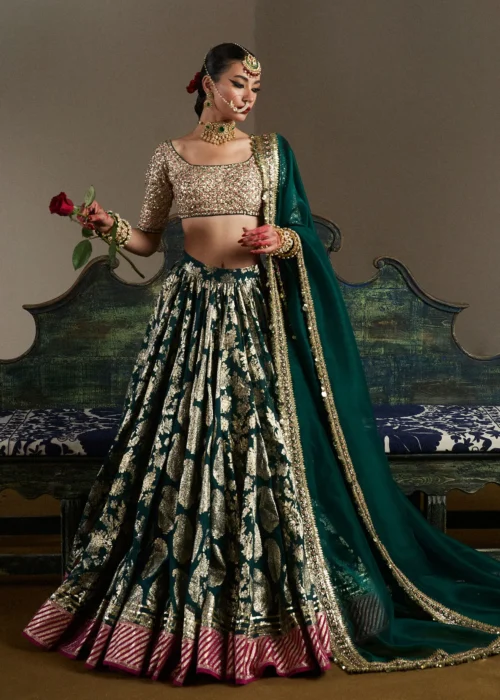
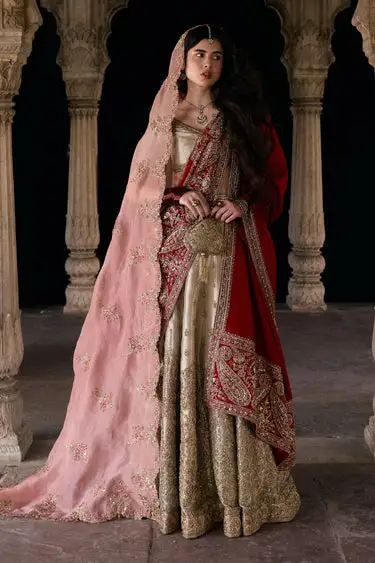
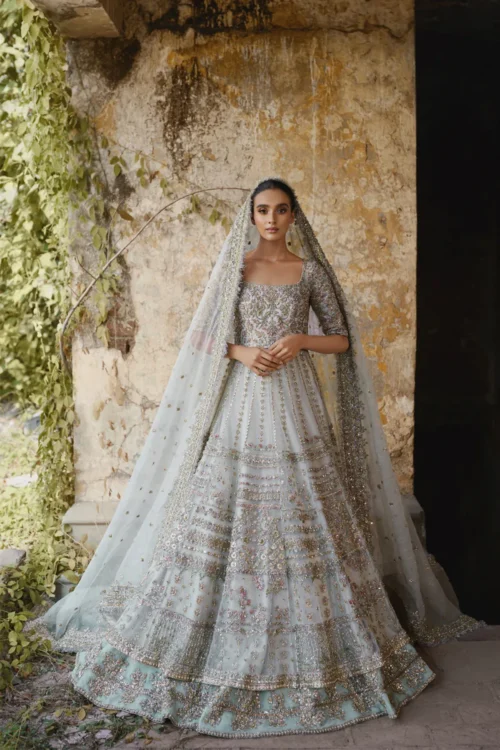
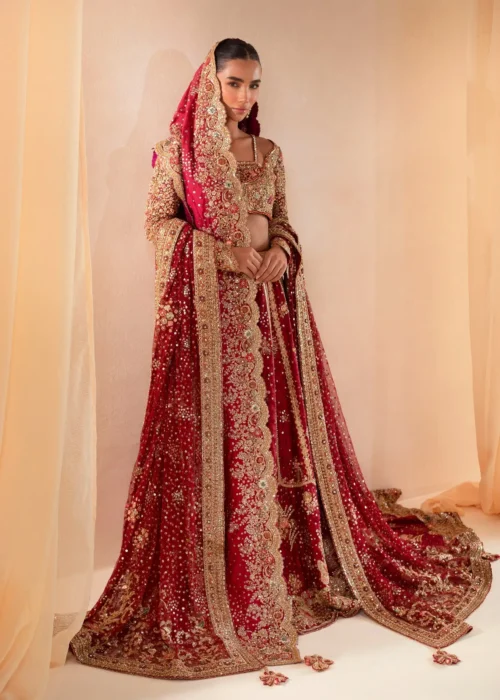
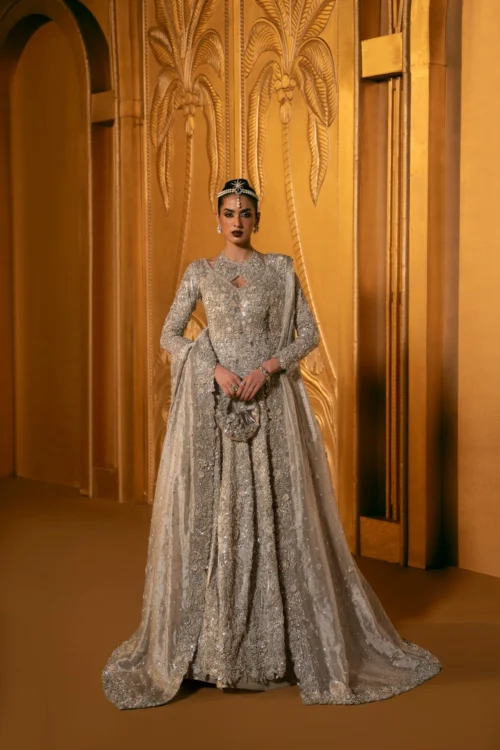
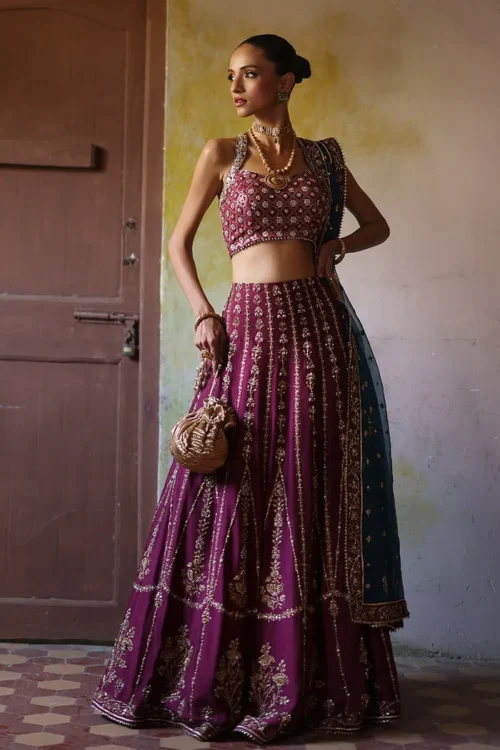
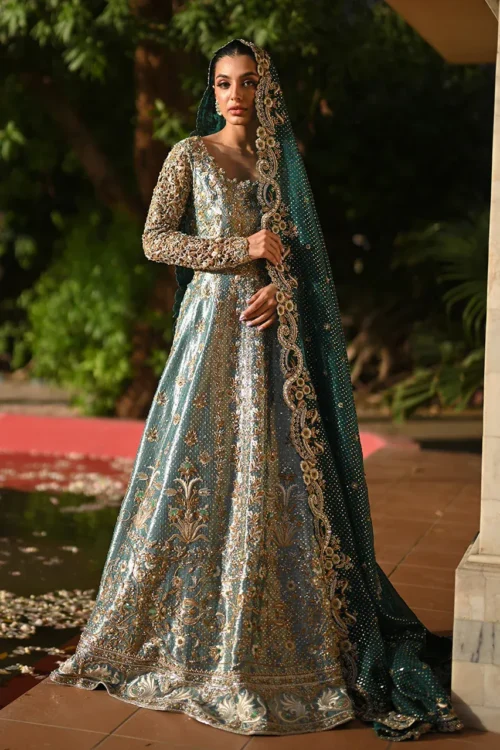
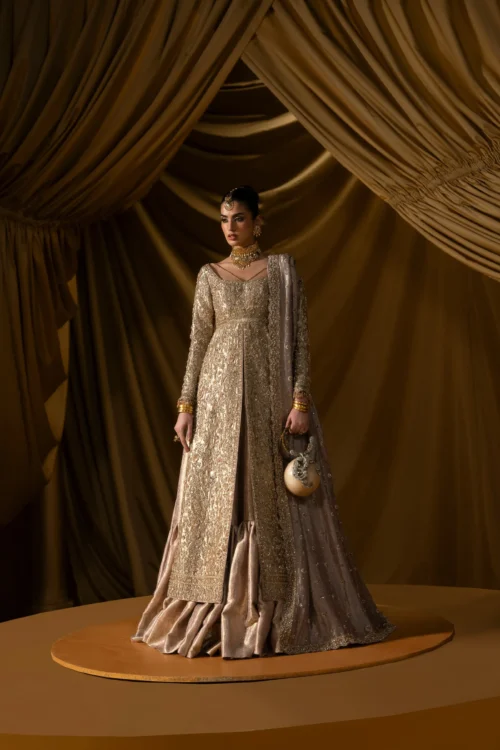
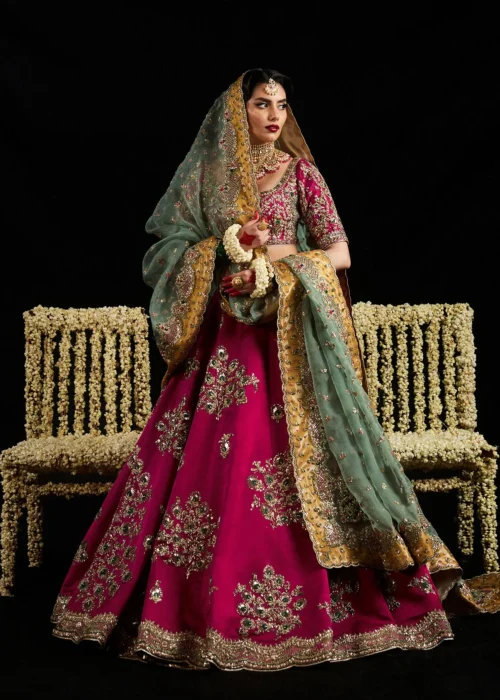
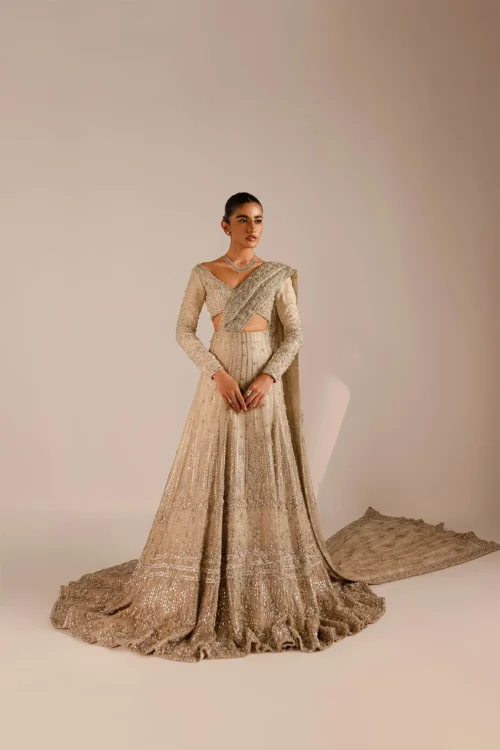
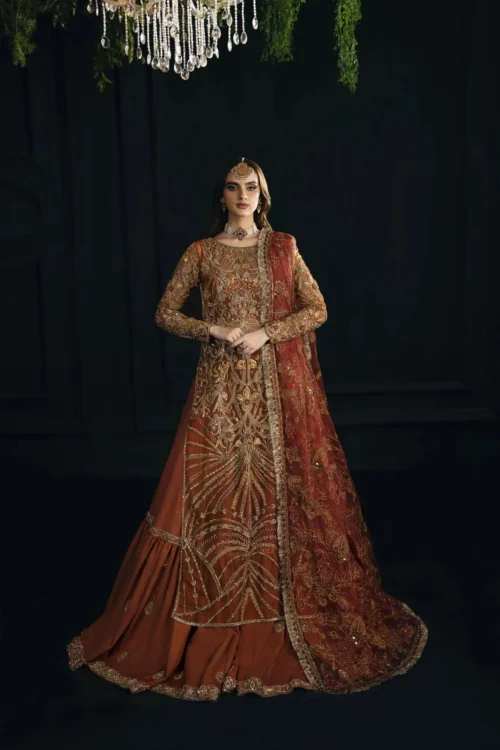
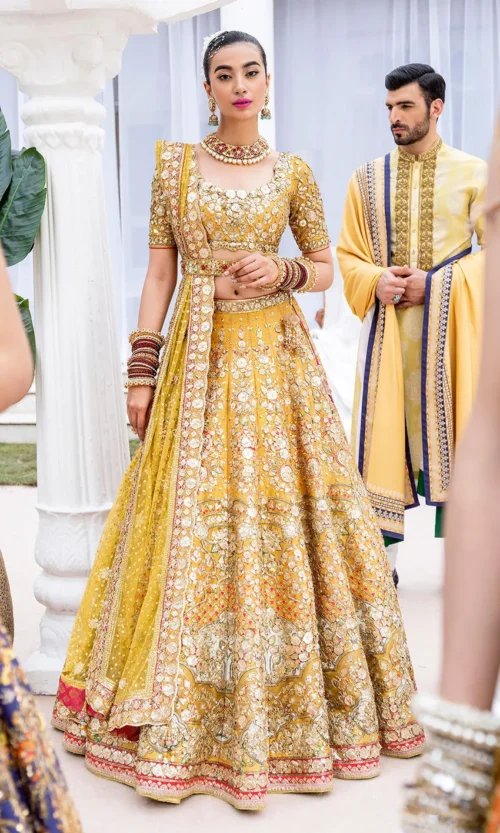
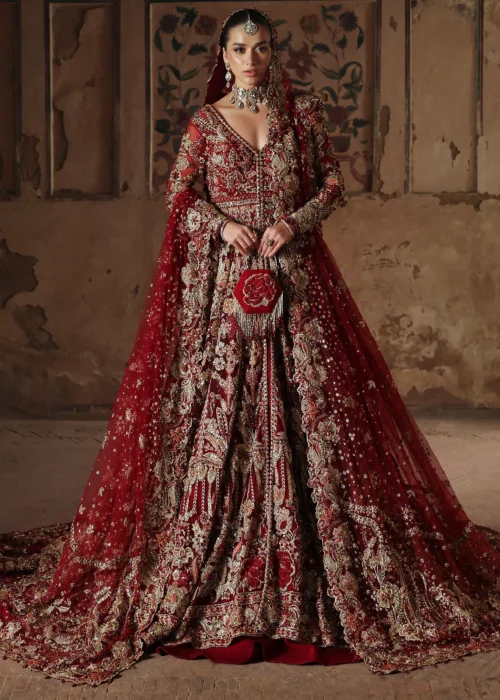
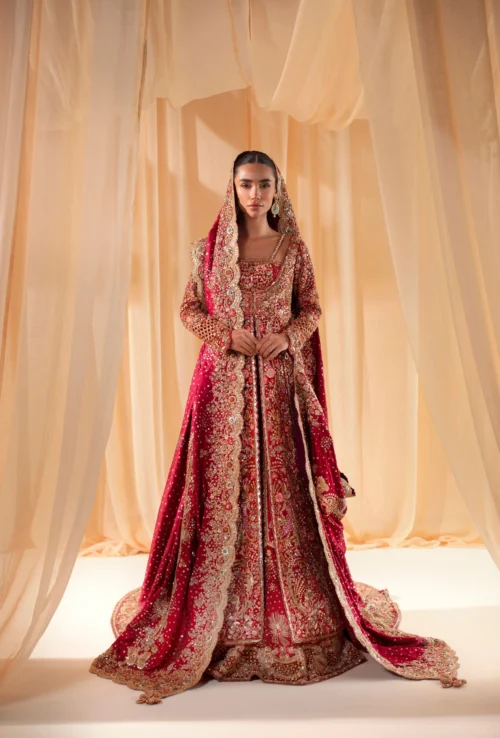
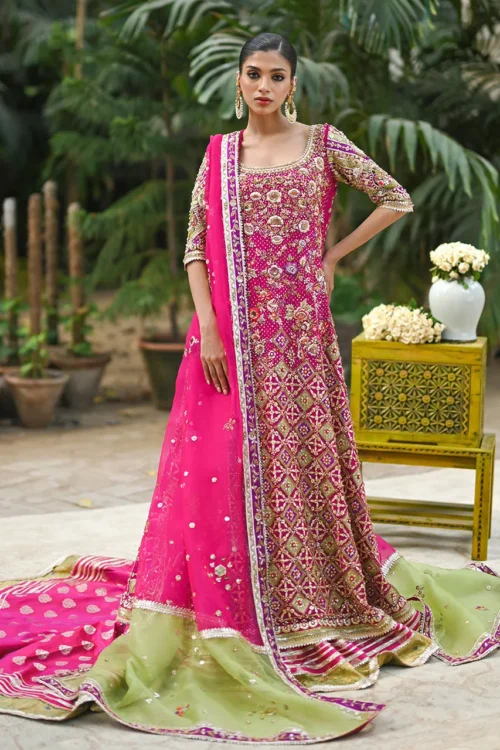
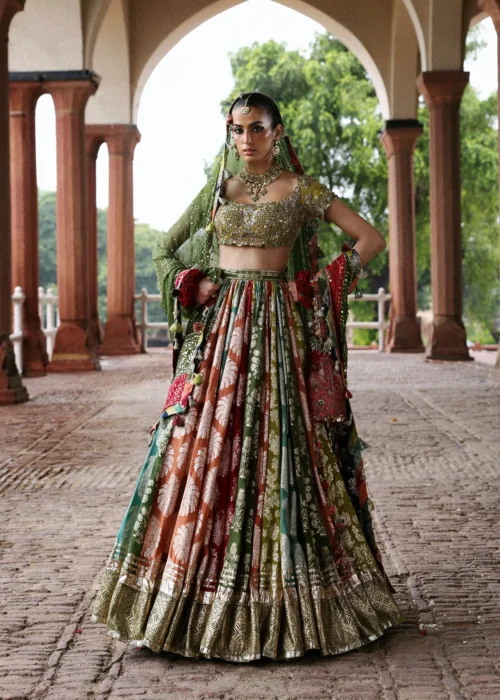
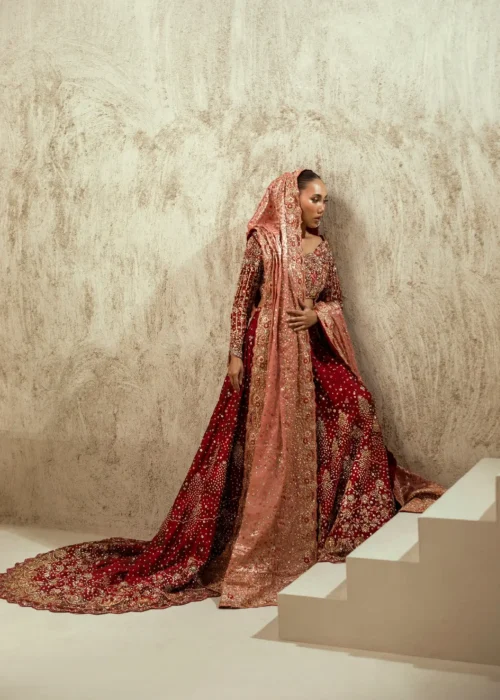
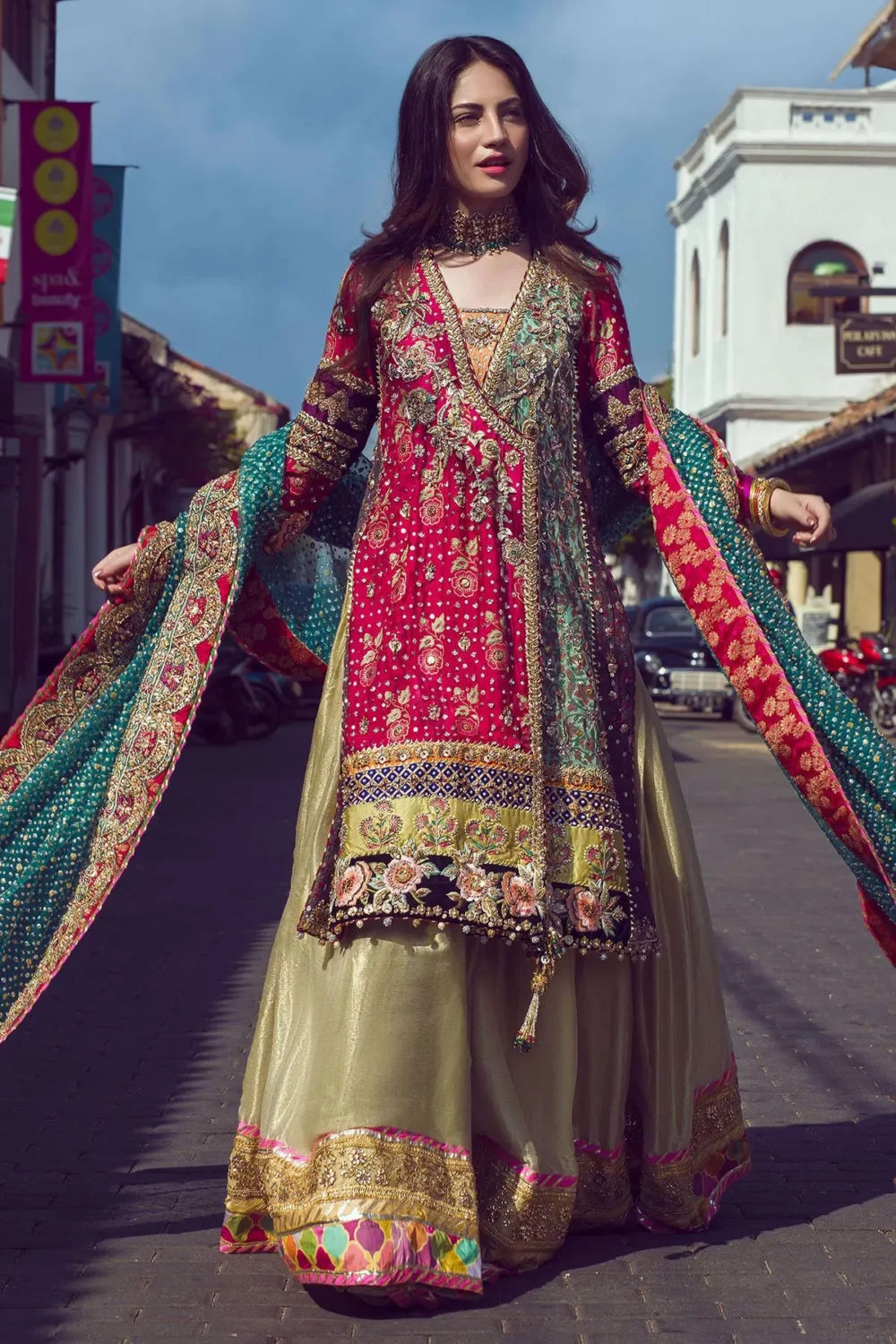
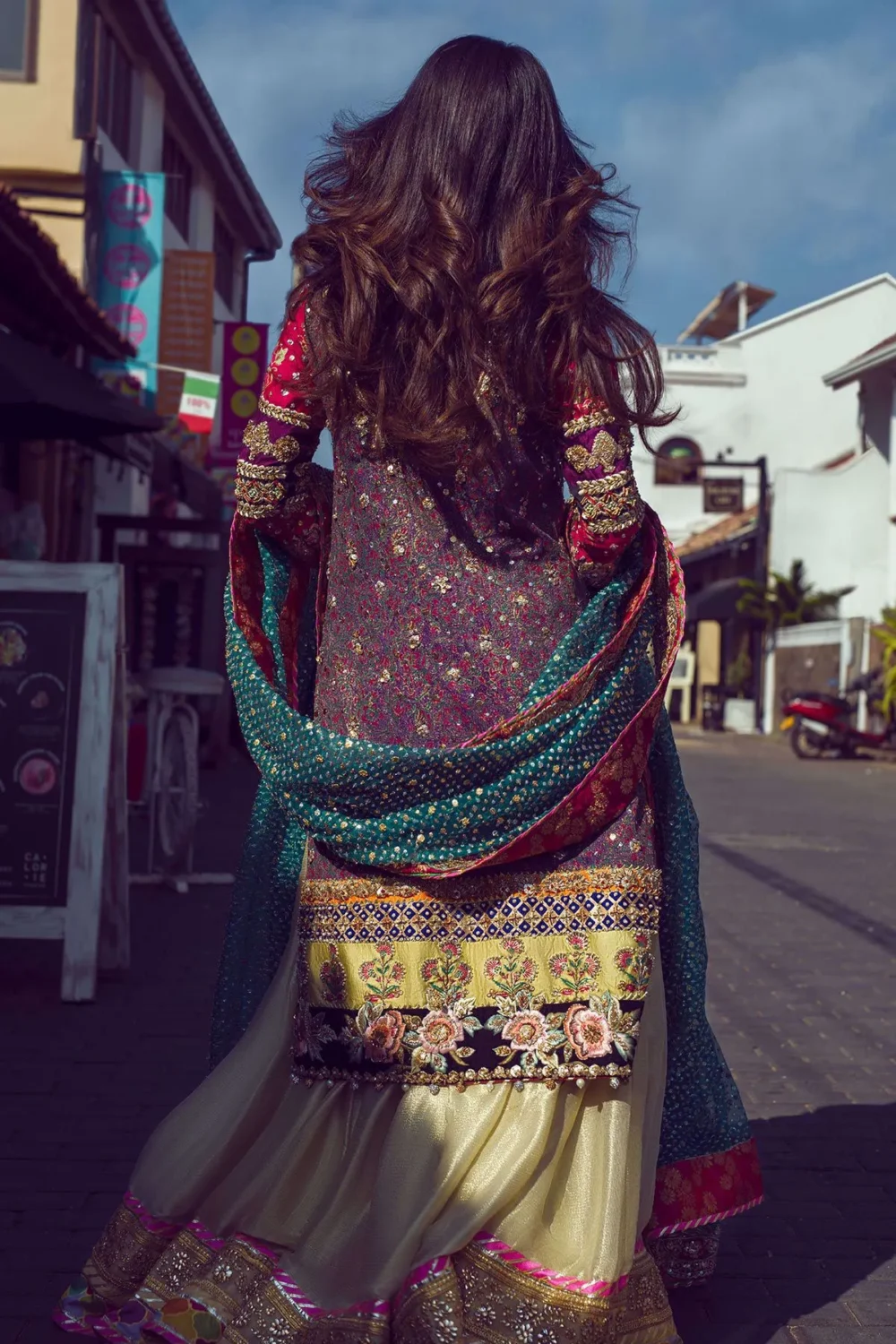
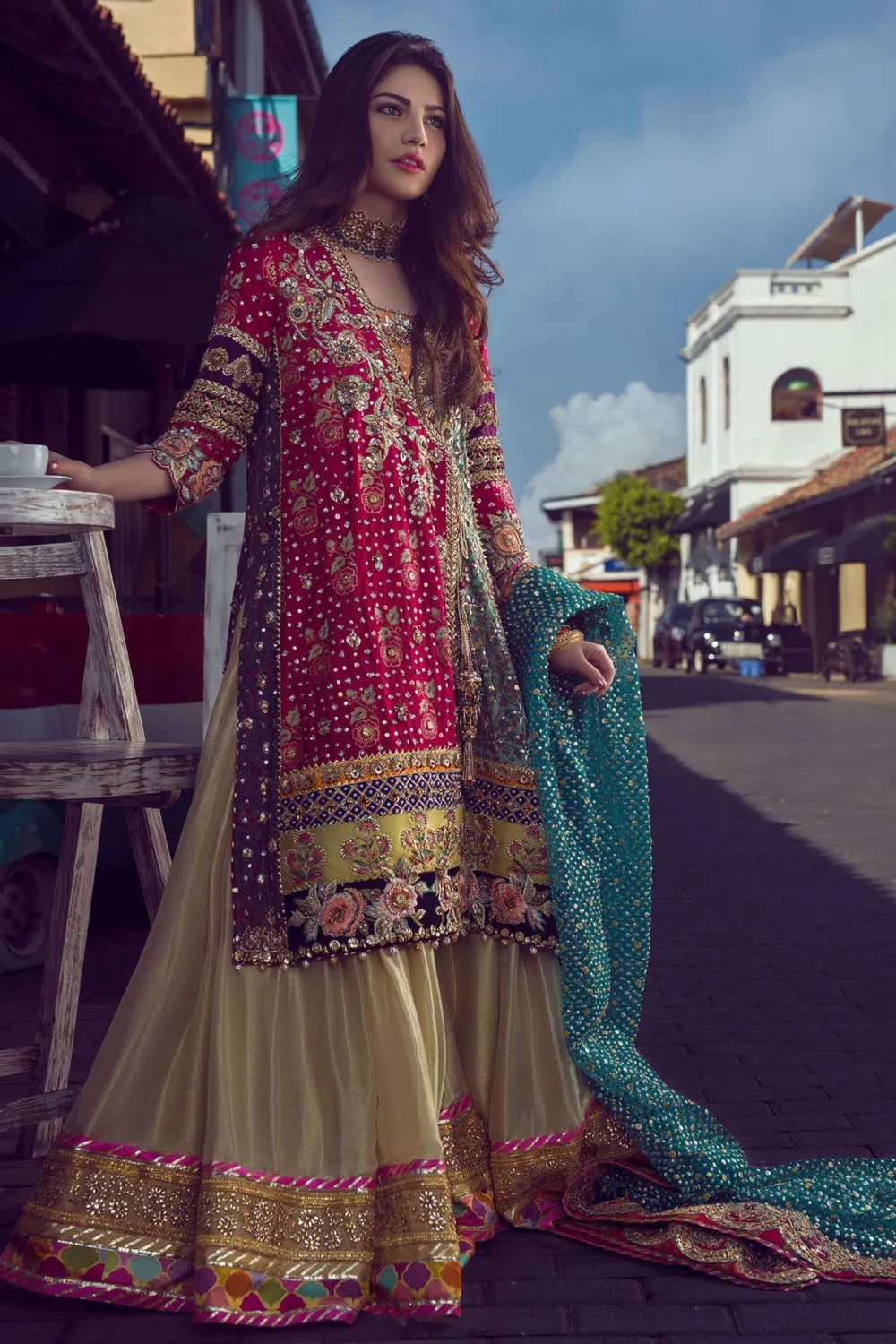
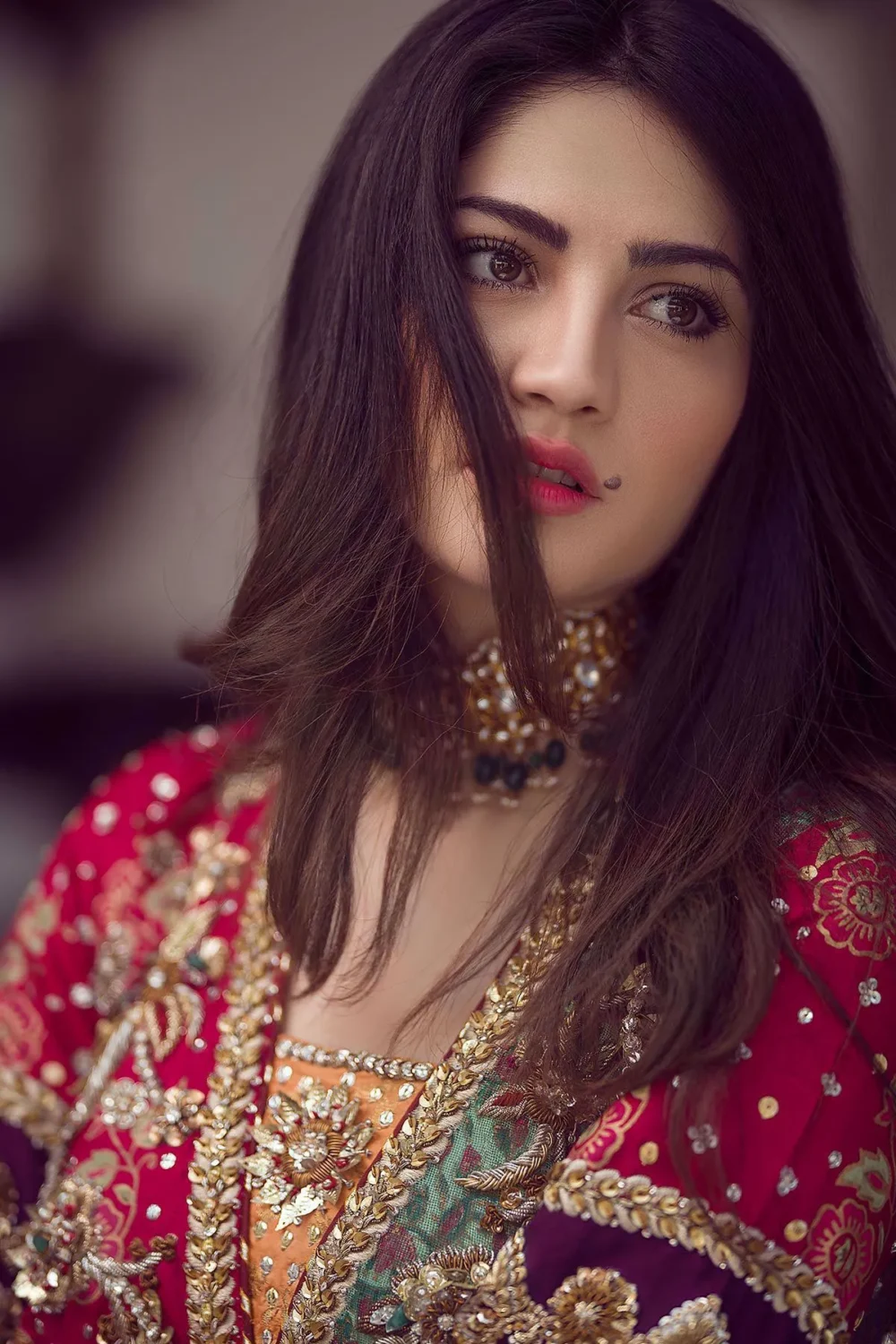
This pakistani mehndi lehenga begins where most ceremony dresses end — in the hands of a Master Artisan who treats every panel as a conversation between colour, technique, and occasion. Named Gul-e-Rana within the HBO Atelier, this ensemble is built around a flared Angharka kameez in deep crimson raw silk: a silhouette that carries the architectural authority of the wrap-front form while moving with the fluid generosity the mehndi ceremony demands. The bodice and sleeves are layered in Kaamdani surface embroidery — a fine allover scatter of metallic sequin work applied by hand — interspersed with raised Resham floral motifs that grow denser toward the cuffs and neckline border.
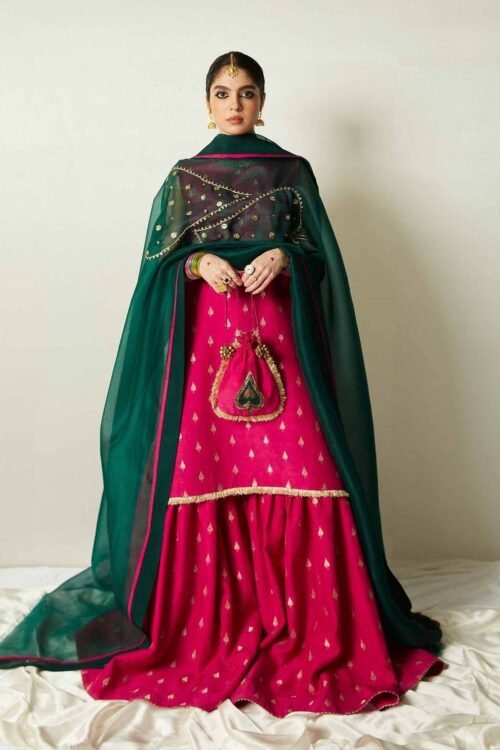
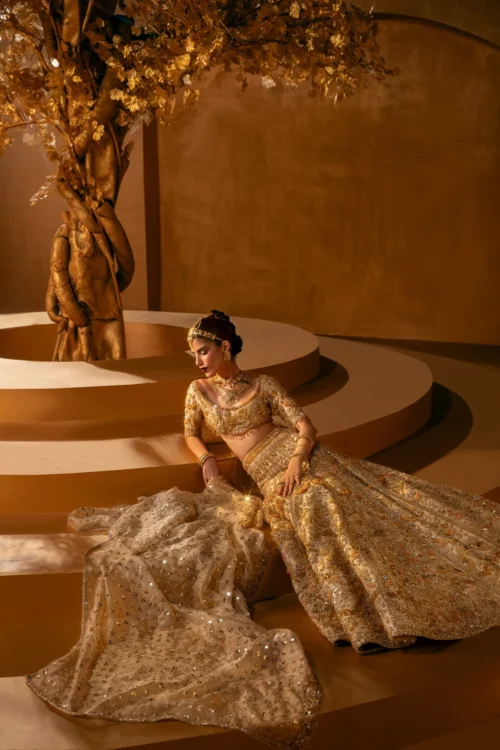
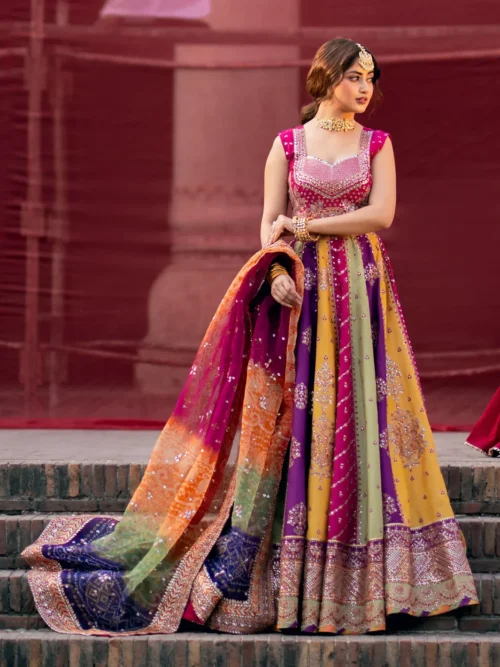
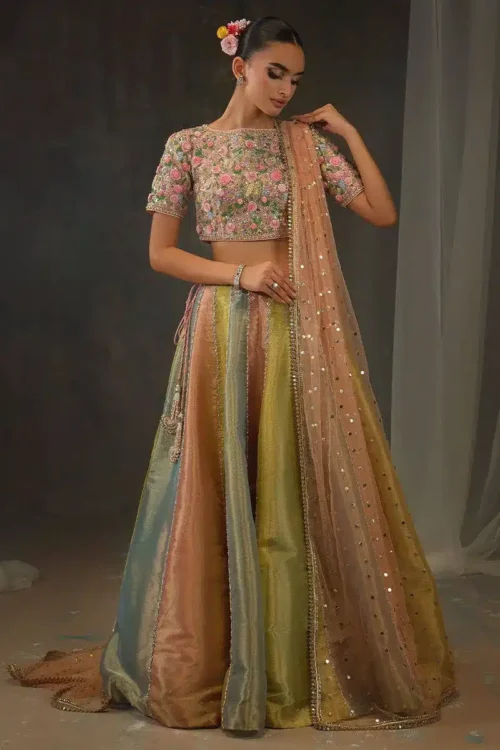
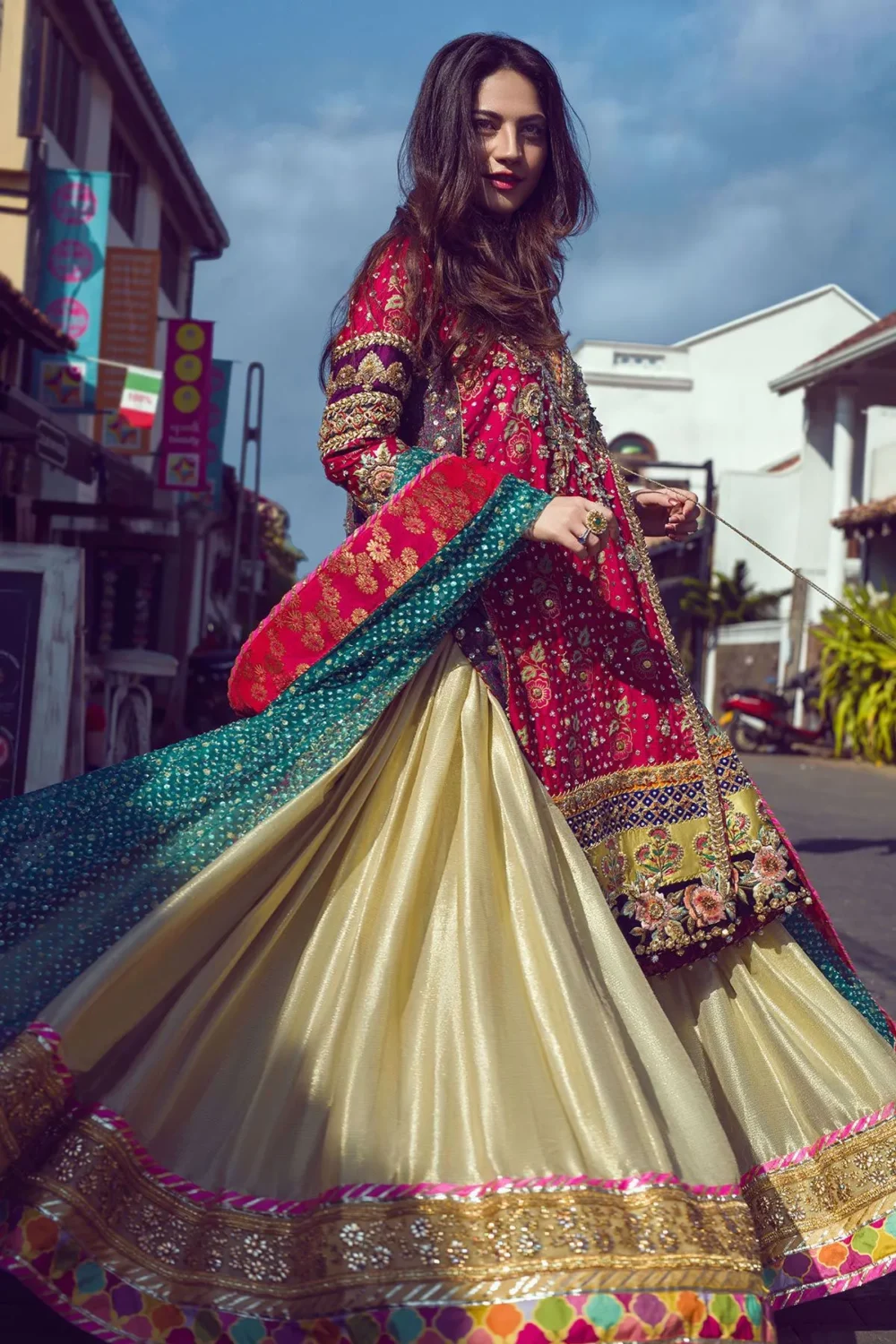
The hemline of this pakistani mehndi lehenga is where the Atelier’s block-print heritage asserts itself most distinctly. A sequence of hand block-printed panels in contrasting amber, teal, and cobalt terminates the Angharka, each panel edged with Resham rosettes — individually hand-knotted silk thread flowers applied stitch by stitch along the appliqué join. Below the Angharka, the gold gathered Sharara moves in broad, luminous folds, its hem finished with Chatta Patti border work and a multi-coloured printed ribbon edge that reflects the Angharka’s palette. The Sharara’s weight and drape are calibrated to carry without strain through hours of ceremony seating, standing, and movement.
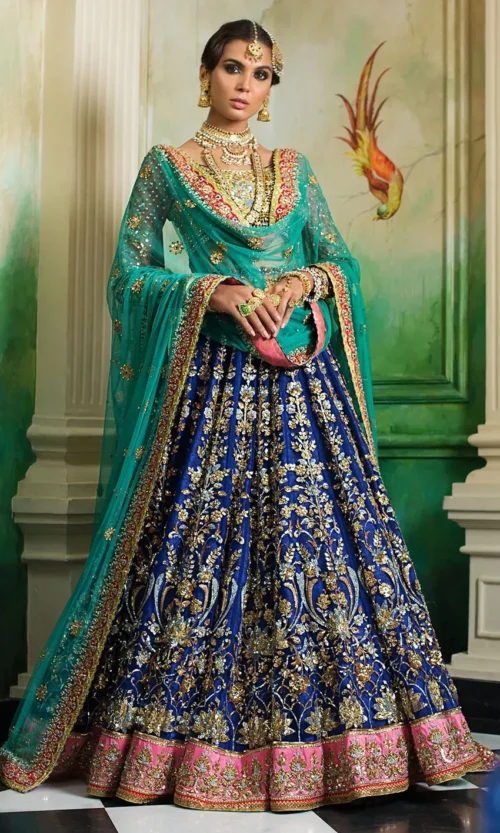
Completing this mehndi lehenga sharara ensemble, the deep teal dupatta is worked throughout in allover Resham and sequin embroidery with scalloped edges — a border treatment that softens the dupatta’s fall across the shoulder and creates a halo of detail visible from every angle of the ceremony space. The tonal dialogue between crimson, gold, and teal is not accidental: it is a deliberate Atelier composition designed to photograph with equal authority in natural and artificial ceremony lighting.
The Atelier’s Craft
Every element of this bridal mehndi lehenga exits the HBO Multan Atelier only after passing through the hands of Master Artisans whose embroidery lineage spans three generations of Multan Kari practice. The Kaamdani allover work — applied to the full surface of the Angharka body — requires a steady, consistent hand across hundreds of square centimetres of fabric; a single panel may occupy a Master Artisan for two to three full working days. The Resham rosettes along the hemline appliqué are constructed individually: each flower is knotted, shaped, and secured before the next begins. No machine replication of this technique exists at the density and dimensionality produced within our Atelier walls.
The block-print panels at the Angharka hem represent a second discipline entirely — hand-carved wooden blocks pressed in sequence to build the repeating botanical motif visible across each panel. The Gota Kinari borders on the Sharara hem, worked in woven gold-silver ribbon, are mitred at each corner seam by hand to maintain pattern continuity around the full circumference of the skirt. These are not decorative choices applied after construction; they are structural decisions made at the design stage and executed as the garment is built, not finished.
Bespoke Customisation and Fit
This Pakistani mehndi lehenga is produced exclusively to order—no inventory, no standard sizes, no approximations. Every bride who commissions Gul-e-Rana provides 37 precise body measurements, gathered through our illustrated WhatsApp measurement guide, which our Atelier team walks through with each client individually before cutting begins. The Angharka wrap front, the Sharara waistband, the sleeve length and cuff circumference, and the dupatta fall—all are adjusted to the bride’s exact dimensions. Progress photographs are shared at three production milestones: post-cutting, post-embroidery, and pre-dispatch. Our 100% Bespoke Fit Guarantee applies without exception: every garment ships with seam allowance at all critical stress points to accommodate final local adjustments where required.
Color variations within the crimson-gold-teal palette are available on consultation. Brides seeking a deeper burgundy body, a champagne Sharara, or an alternate dupatta tone may discuss modifications at the initial WhatsApp consultation. Silhouette variations — including a full Lehenga skirt replacing the Sharara, or a longer Angharka length — are also available subject to design review by the Atelier team.
Worldwide Delivery and Garment Care
All HBO orders ship via fully insured international courier in a rigid garment box with internal muslin wrapping. Standard crafting and delivery timeline for this pakistani mehndi lehenga to the USA, UK, Canada, or UAE is 8 to 12 weeks from measurement confirmation. For Eid-ul-Adha 2026 ceremonies, consultation must begin by May 10, 2026 to guarantee Atelier completion and pre-celebration delivery. Upon receipt, store flat or on a padded hanger away from direct light. Dry clean only — communicate the Kaamdani and Resham surface work to your dry cleaner before submission. Hand-pressed on reverse with a pressing cloth at low heat; the block-print appliqué panels should never be ironed directly.
Frequently Asked Questions
How does the bespoke sizing process work for an international order?
After placing your order, our Atelier team initiates your WhatsApp consultation within 24 hours. We share an illustrated 37-measurement guide and walk you through each measurement in sequence. You do not need a tailor — the guide is designed for self-measurement with a standard tape measure and a second person to assist. Measurements are confirmed before cutting begins, and progress photographs are shared at three production stages for your approval.
Can this pakistani mehndi lehenga be delivered to the United States in time for my ceremony?
Yes. We ship to all US states via fully insured international courier with end-to-end tracking coordinated through WhatsApp. Standard delivery timeline is 8 to 12 weeks from measurement confirmation. For urgent timelines, contact our Atelier team via WhatsApp before ordering to confirm availability of an expedited crafting slot.
What fabrics and embroidery techniques are used in this ensemble?
The Angharka is crafted in pure raw silk. Embellishment techniques include Kaamdani allover metallic sequin work, hand-knotted Resham silk thread rosettes, hand block-printed appliqué panels in multi-colour, and Gota Kinari woven ribbon borders on the Sharara hem. The teal dupatta is worked in allover Resham and sequin embroidery with hand-finished scalloped edges. All techniques are performed exclusively by Master Artisans in our Multan Atelier — no outsourcing, no machine substitution.