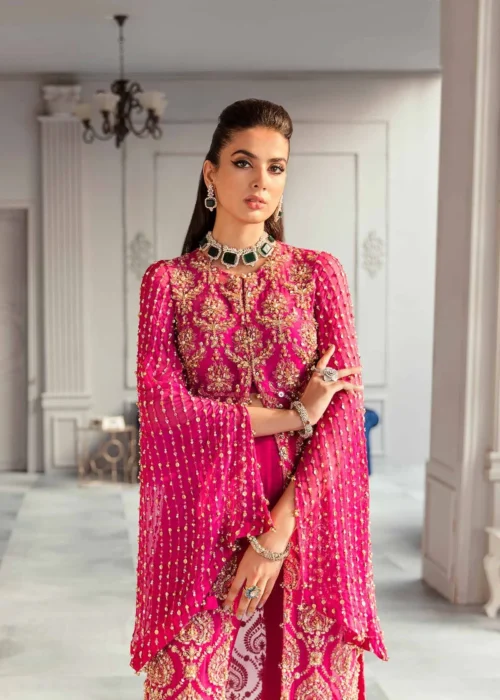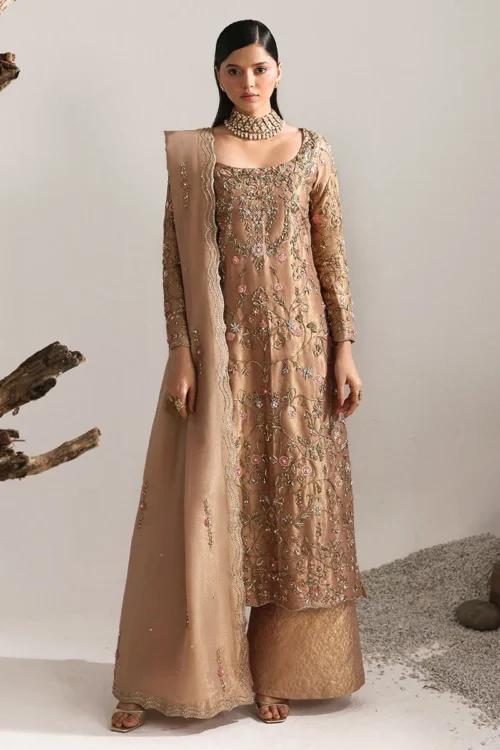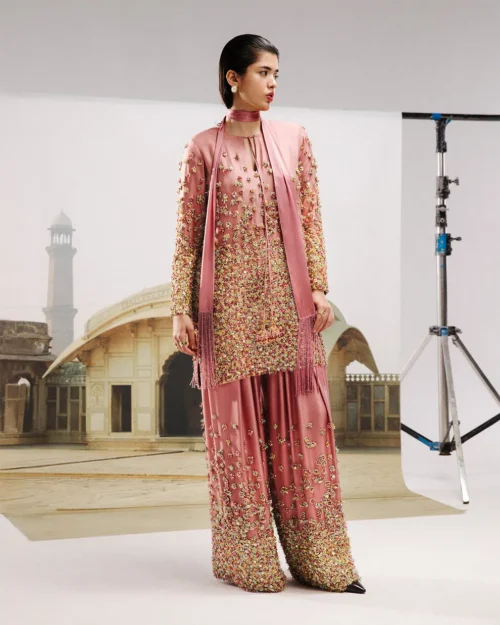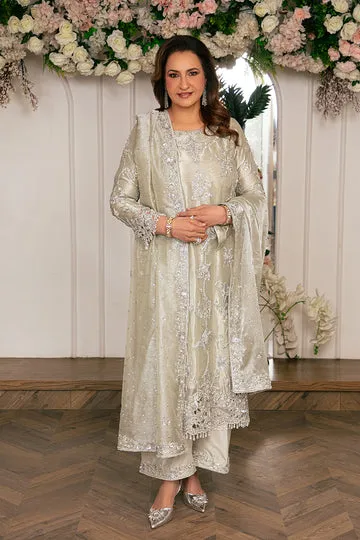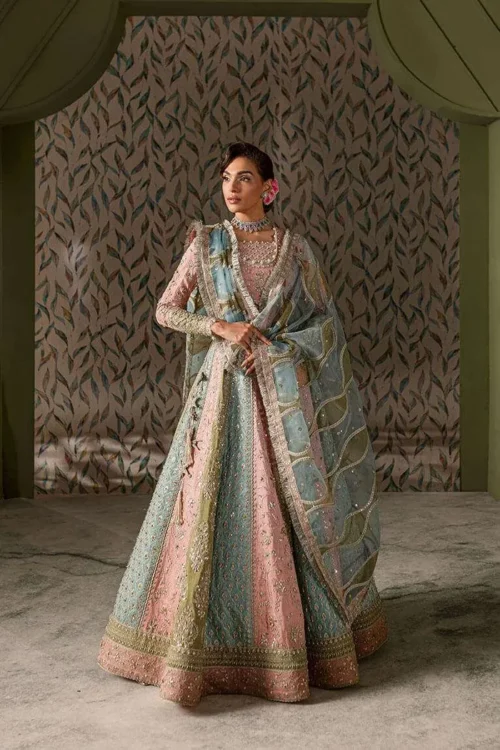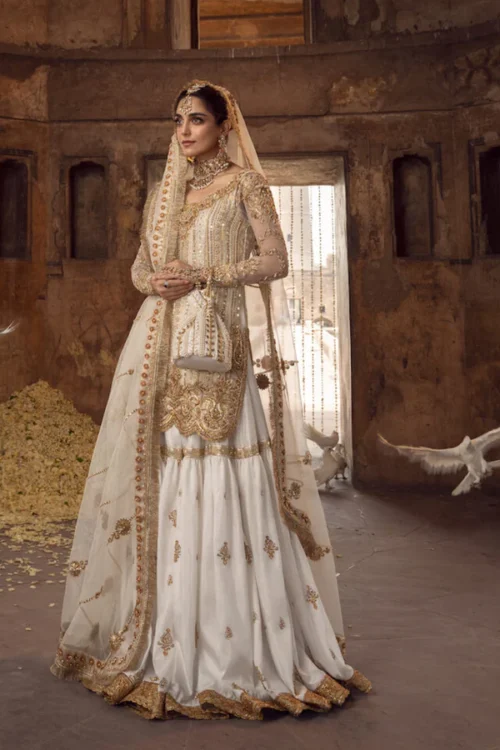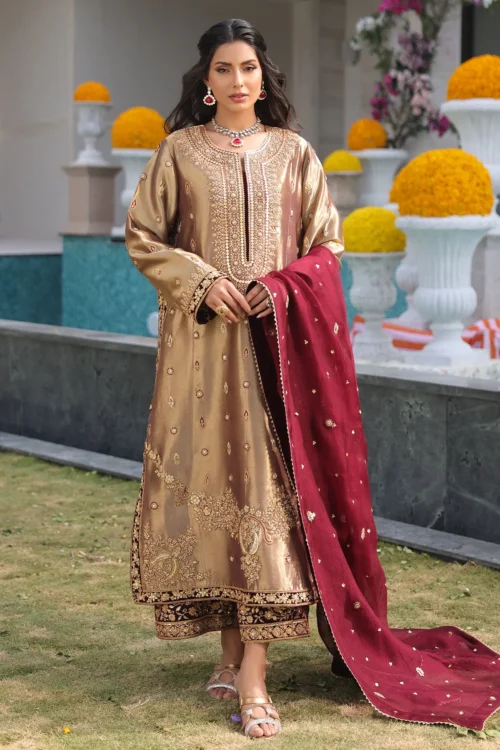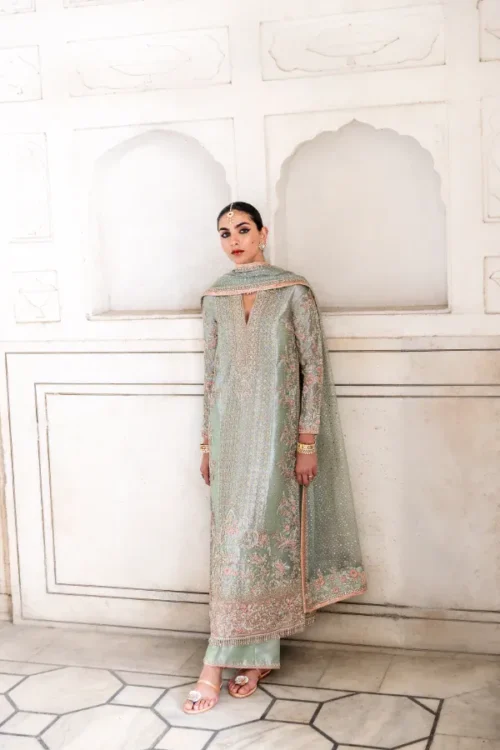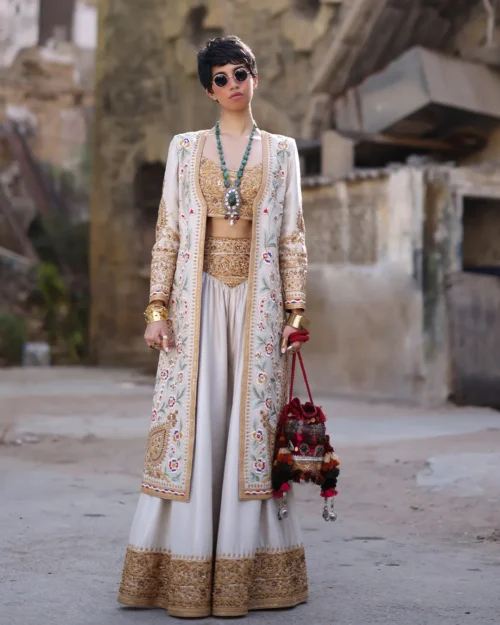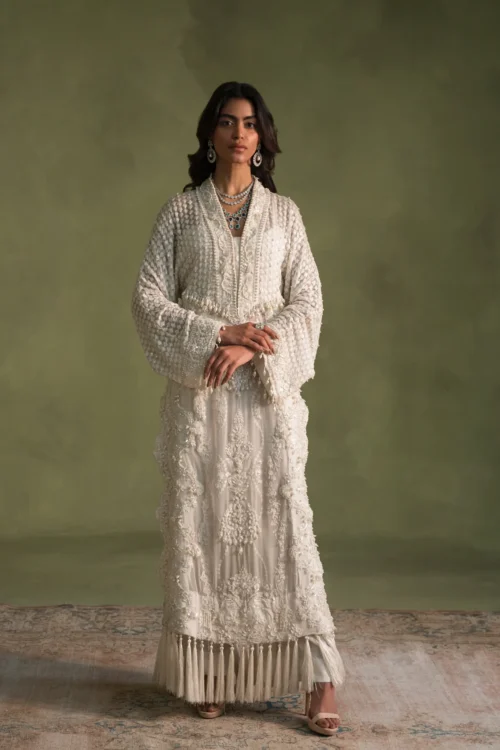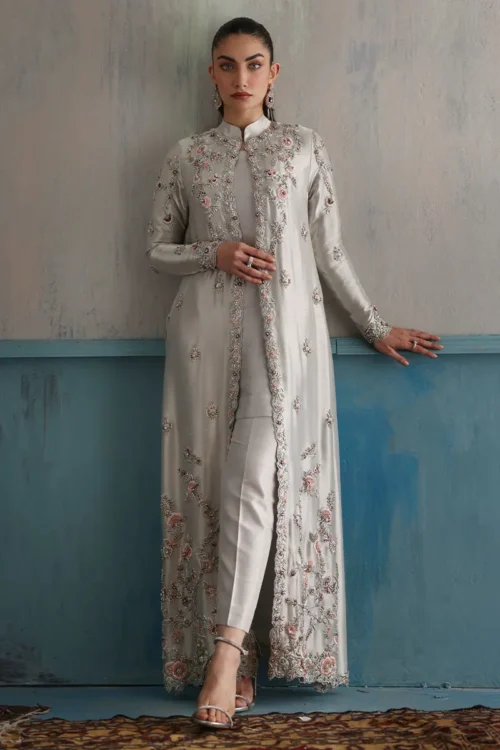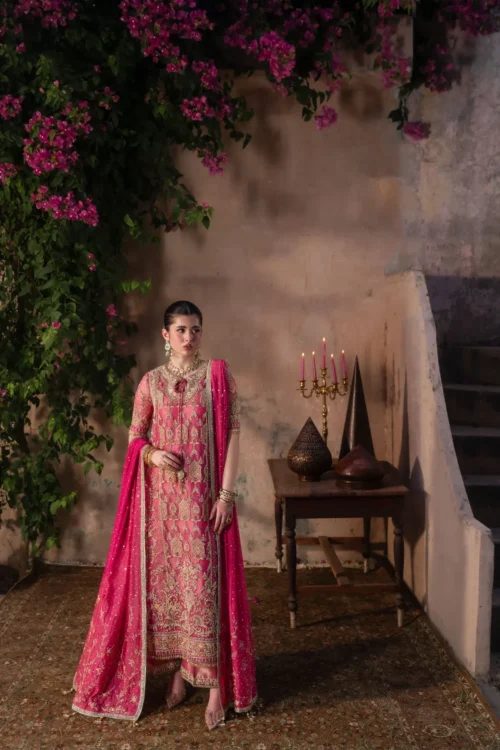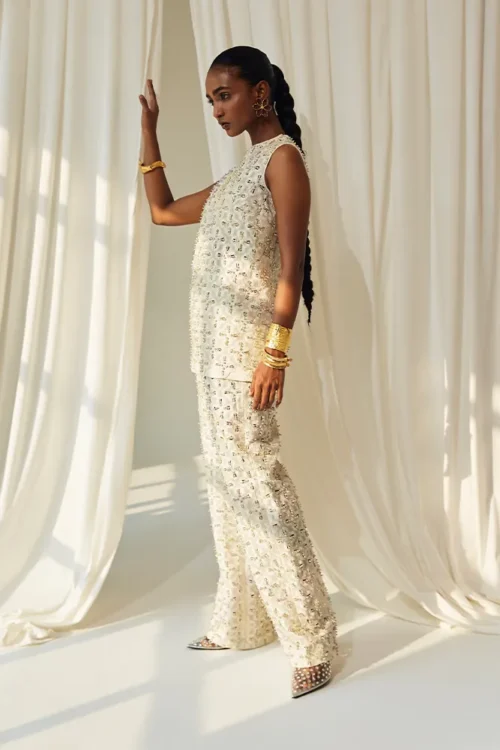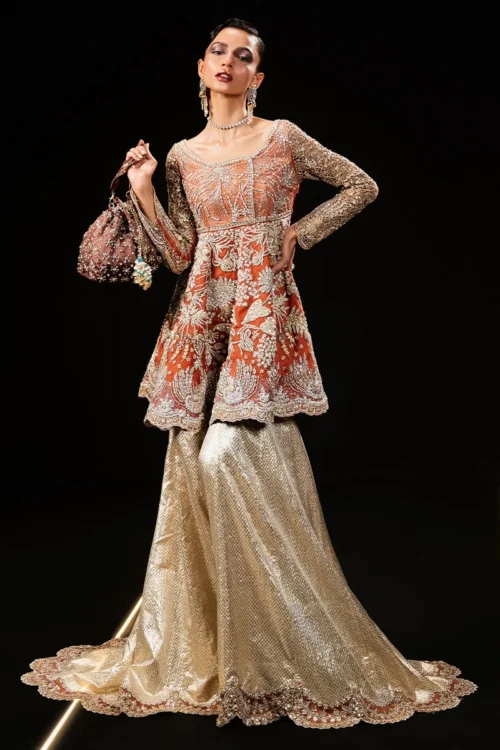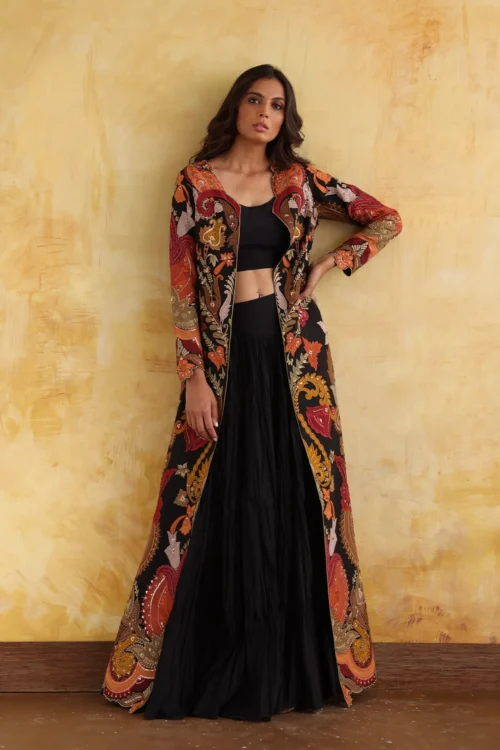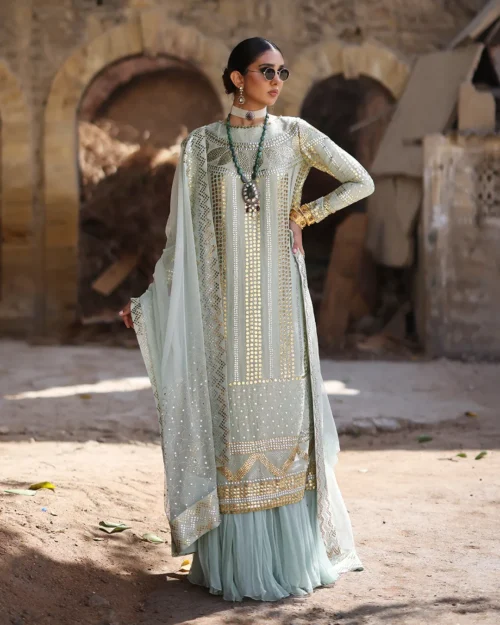
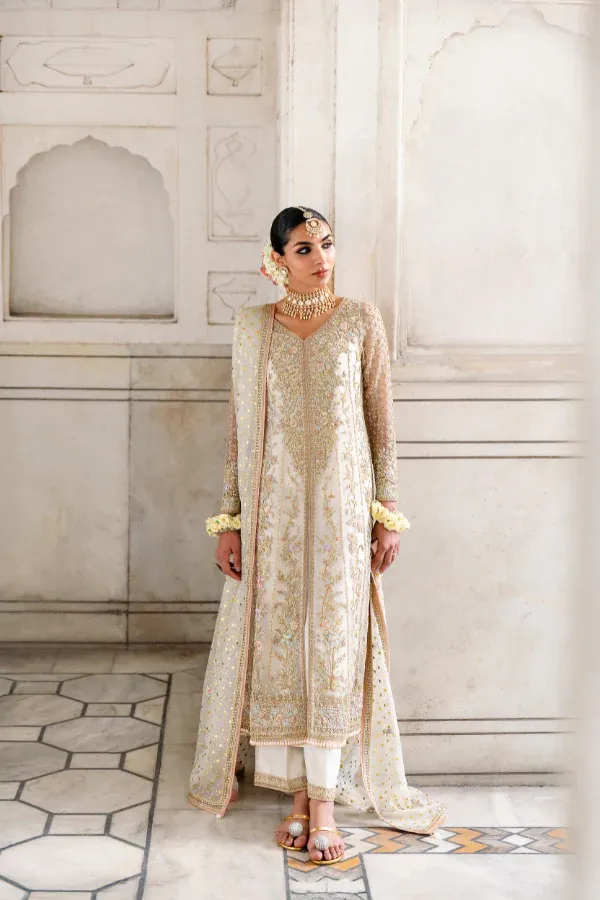







Mukaish work suit — ivory net organza from the Multan atelier
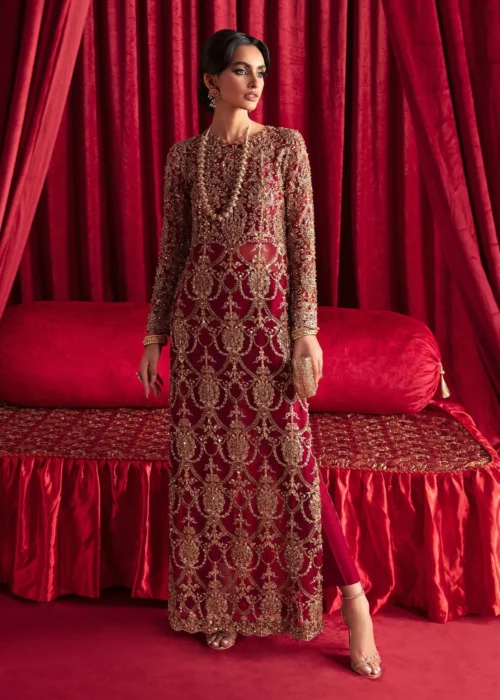
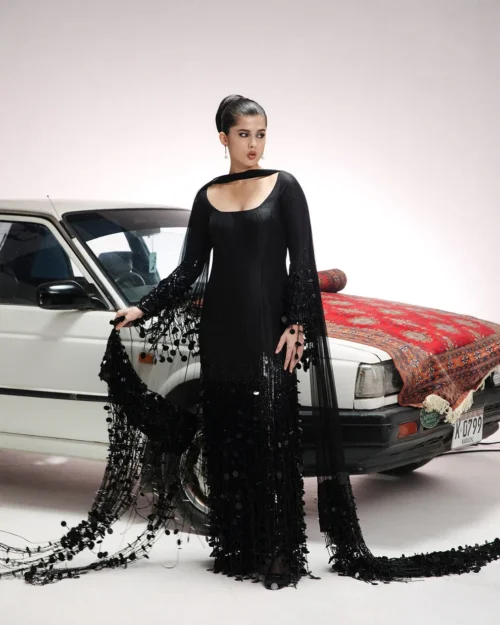
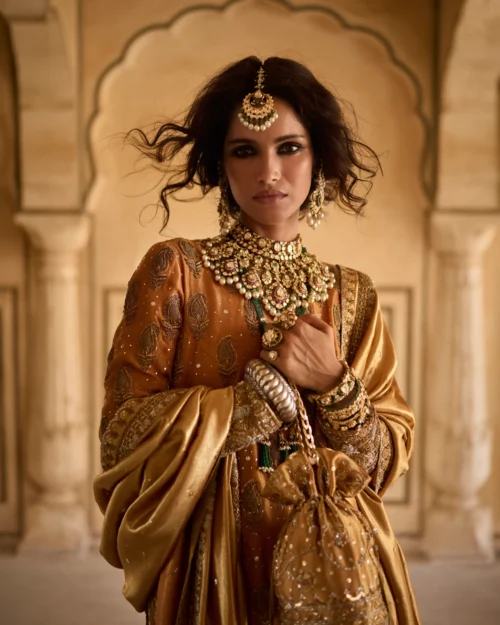
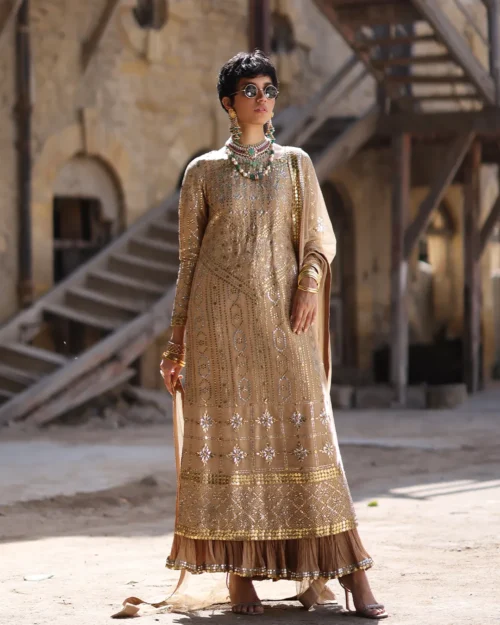
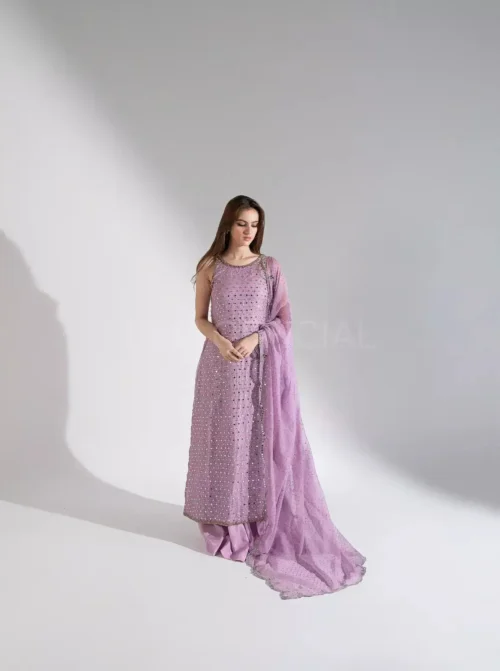
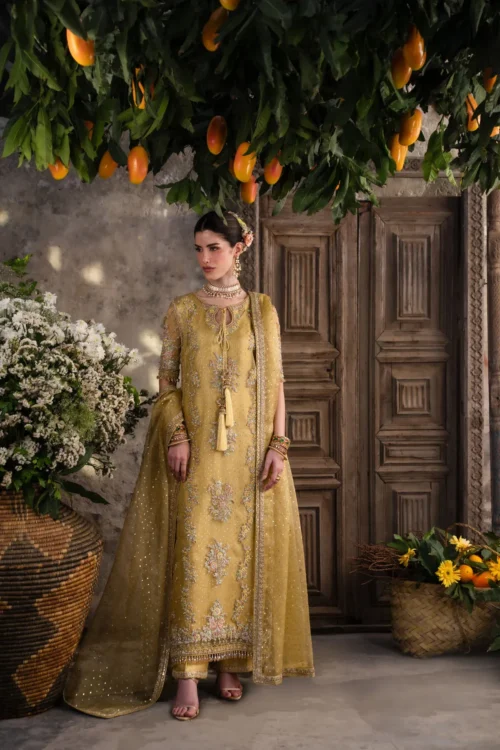
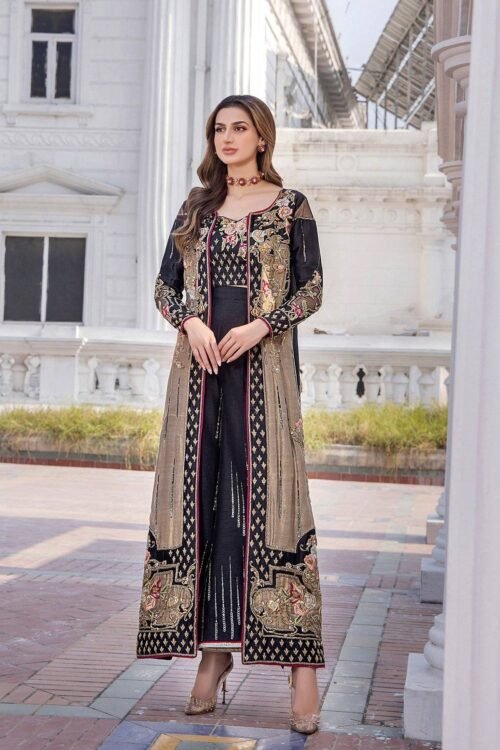
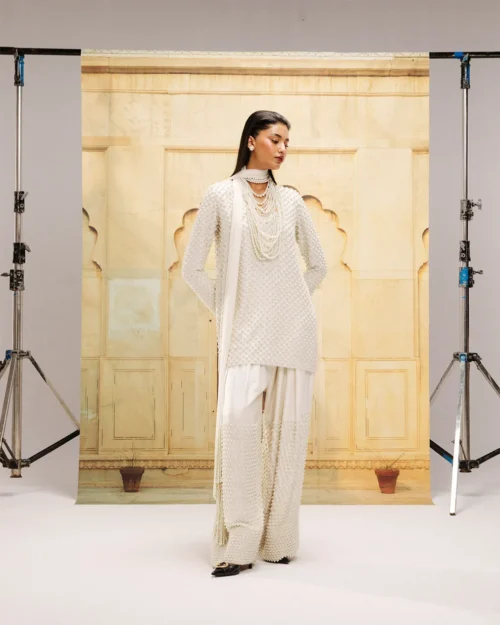
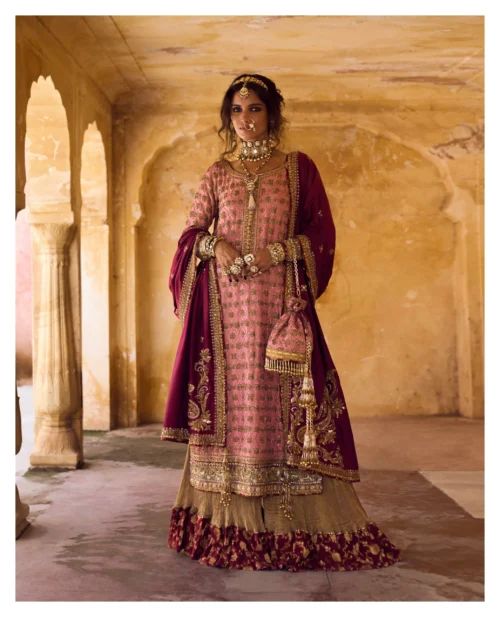
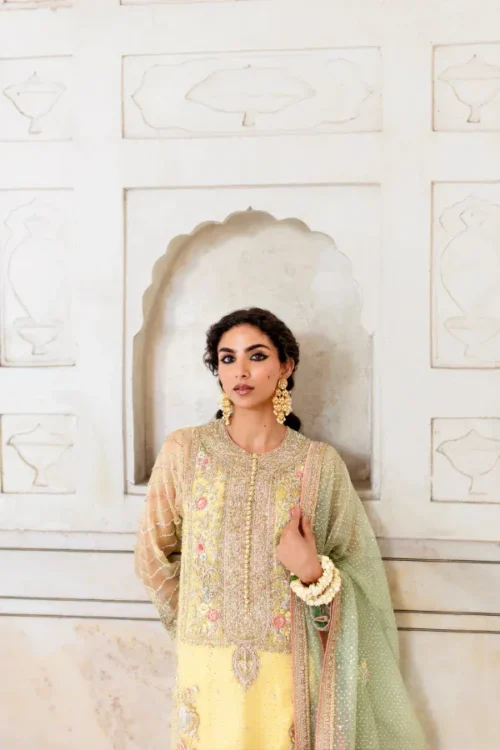
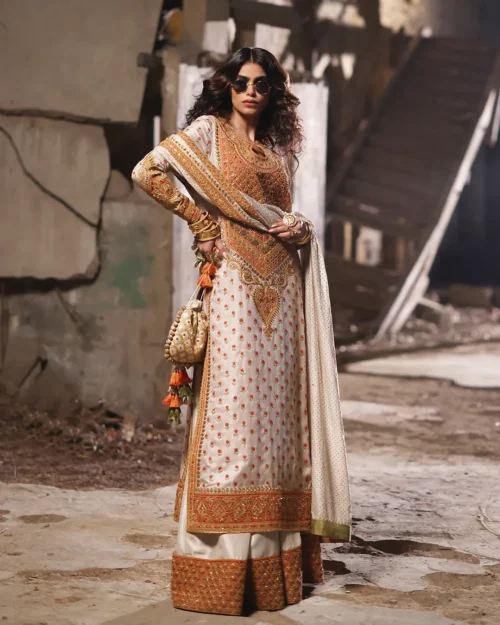
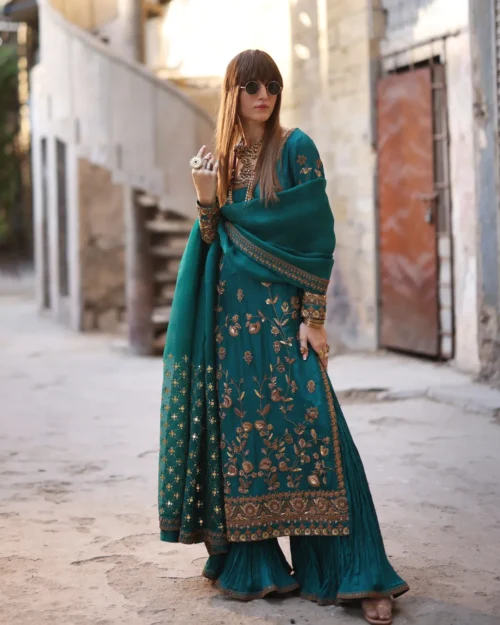
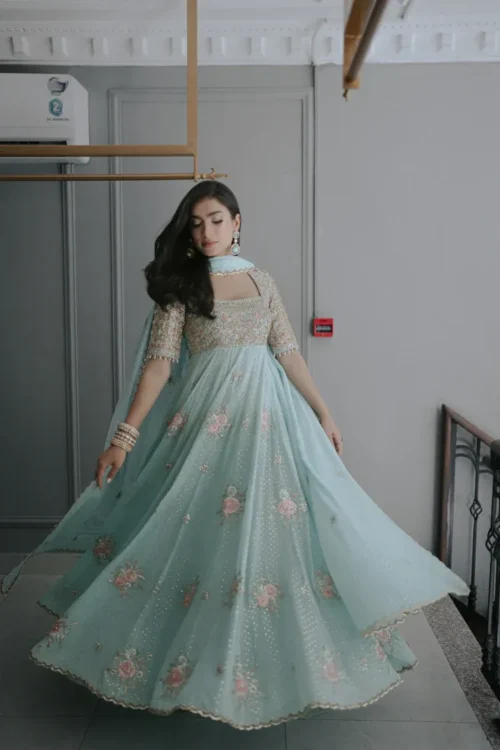
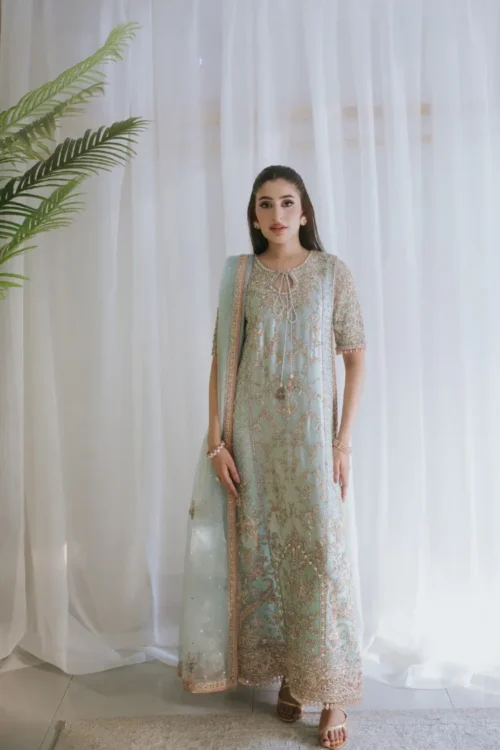
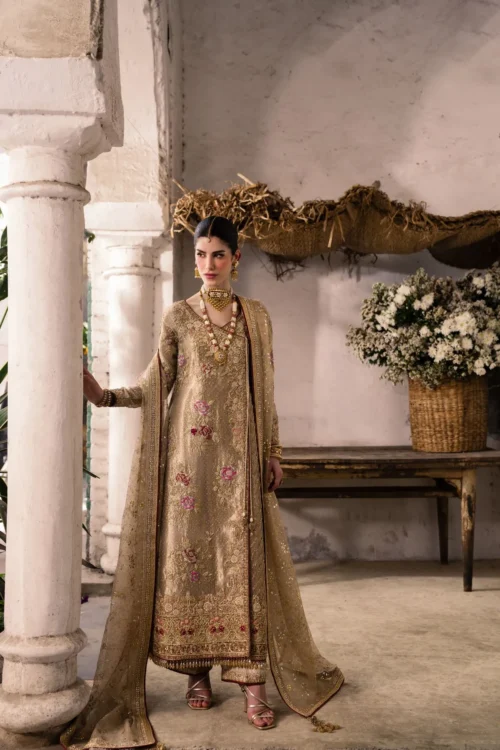
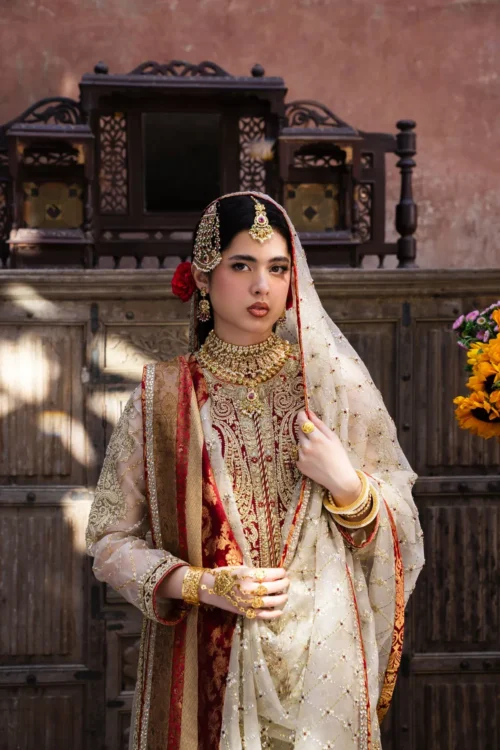
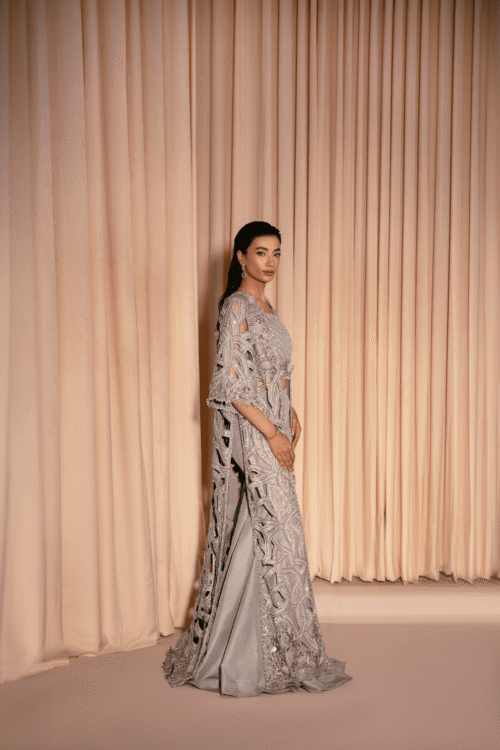
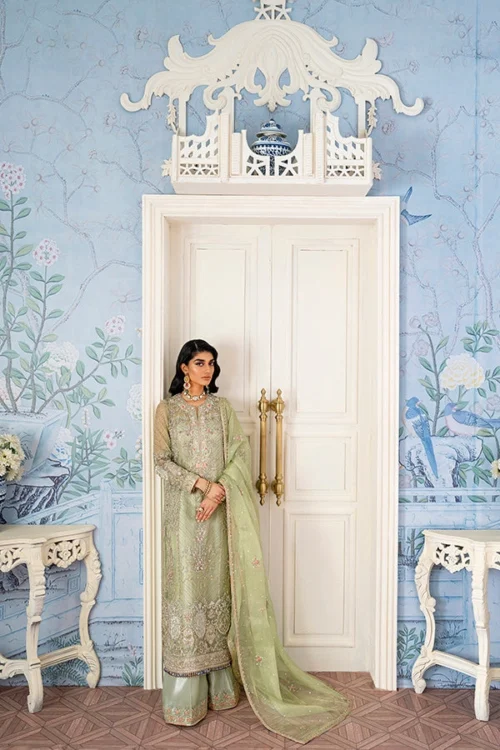
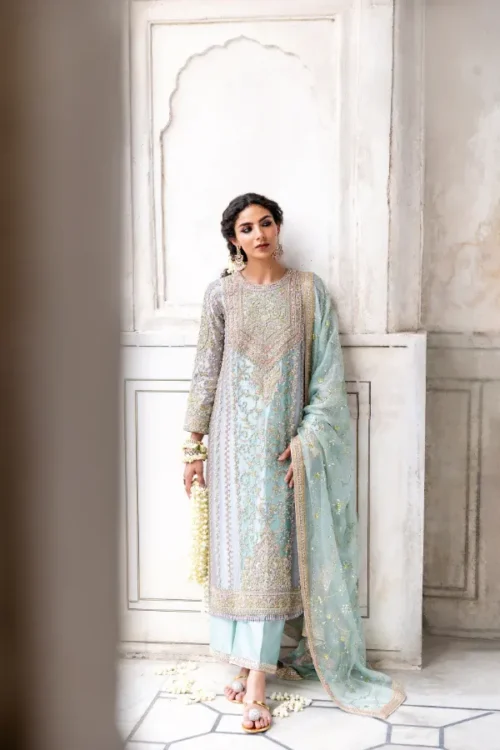
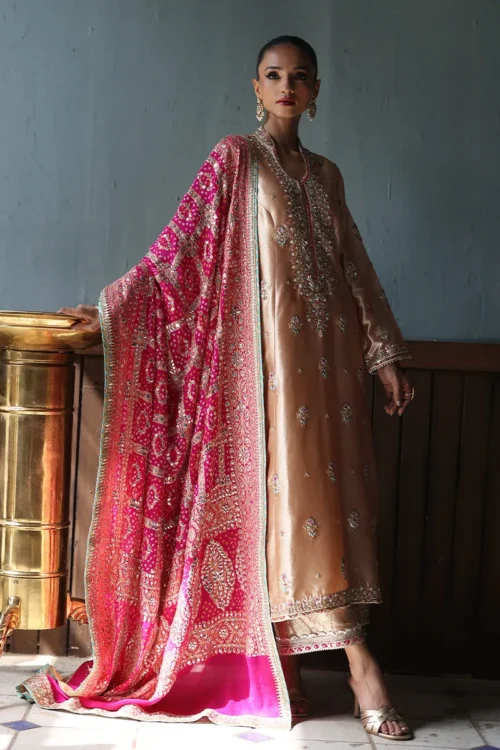
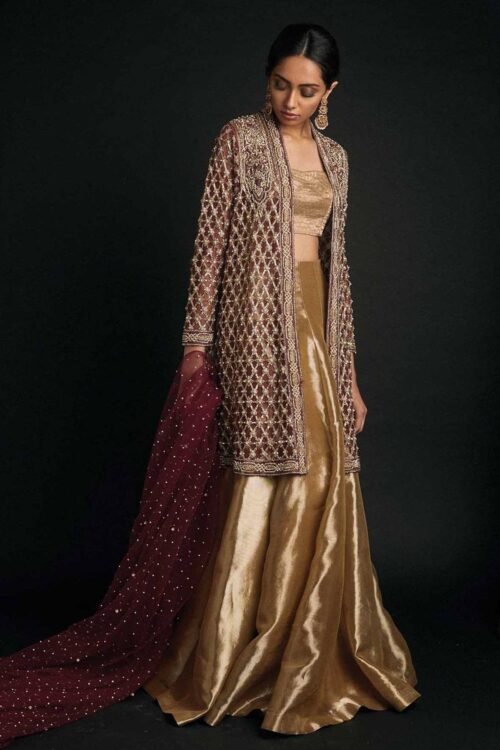
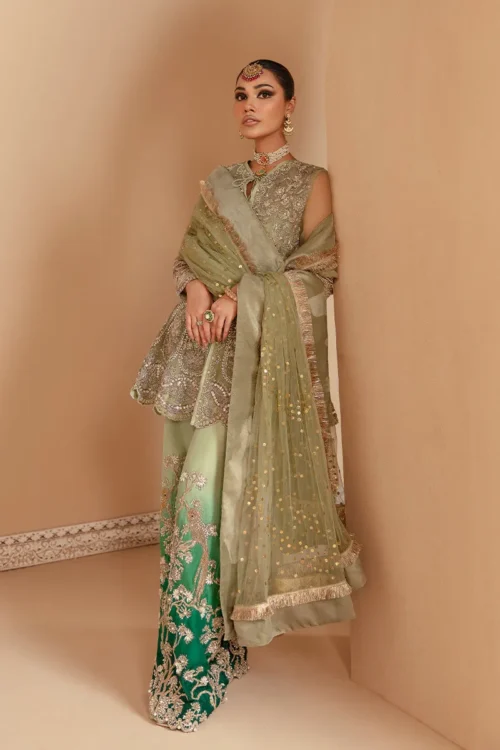
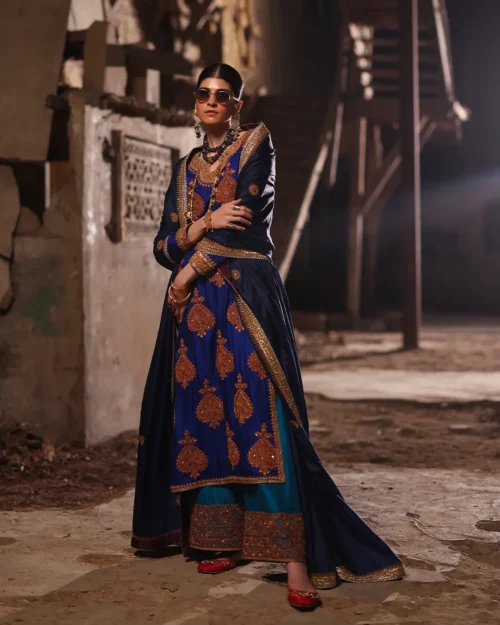
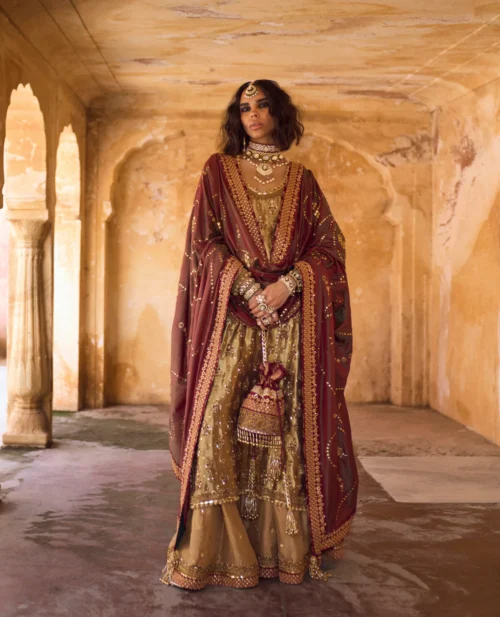
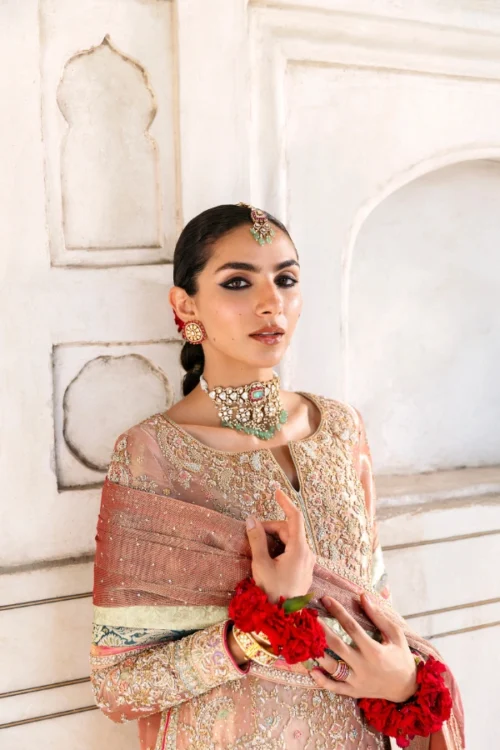
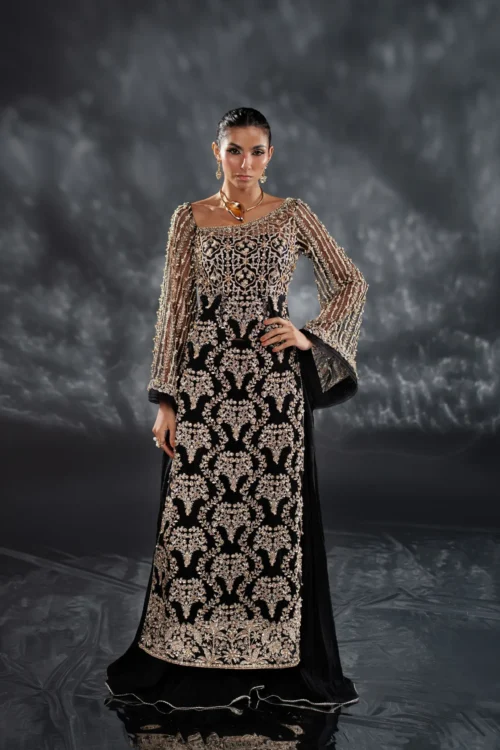
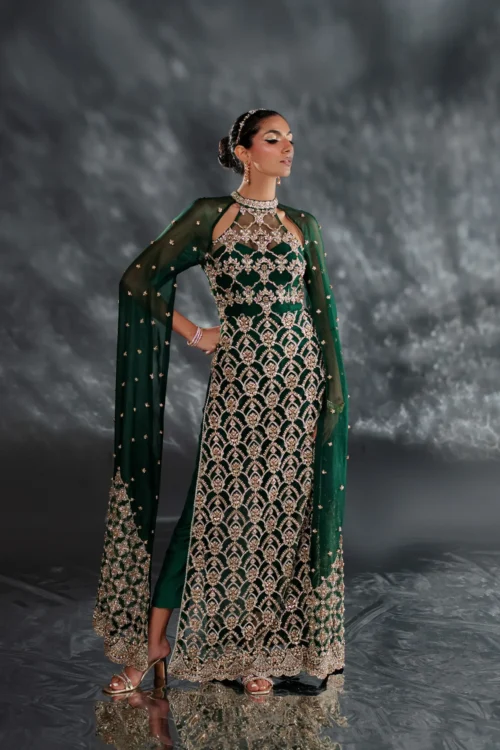
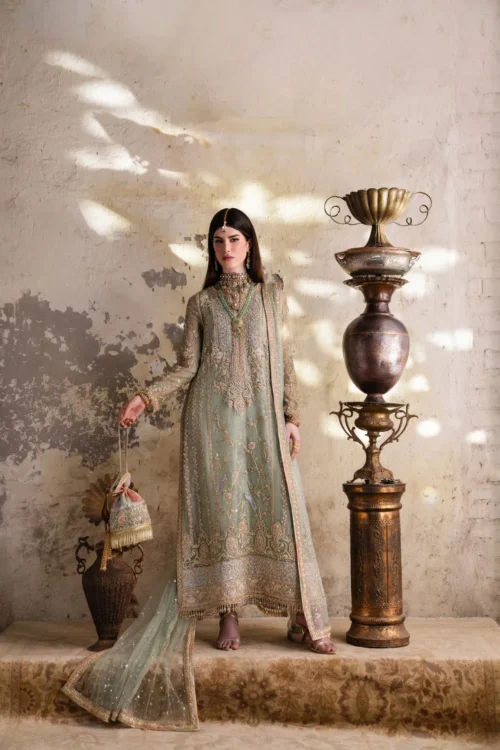
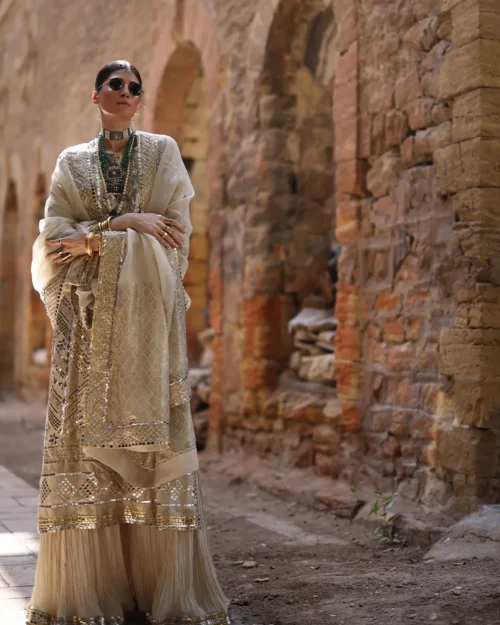
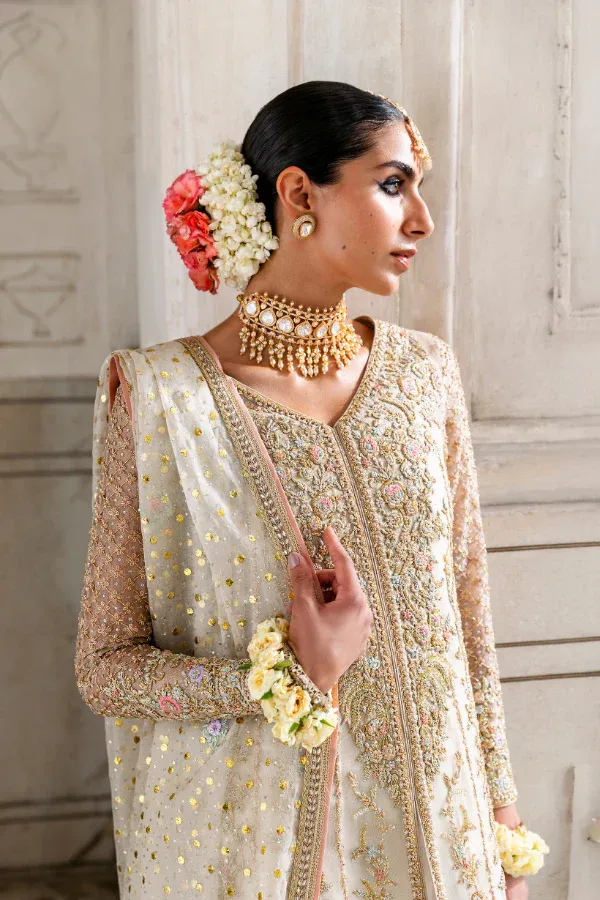
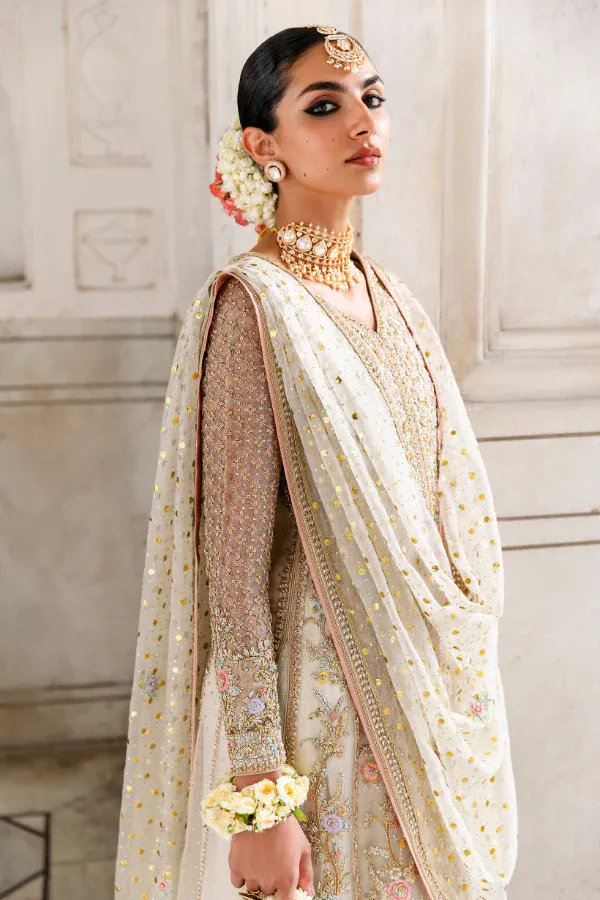
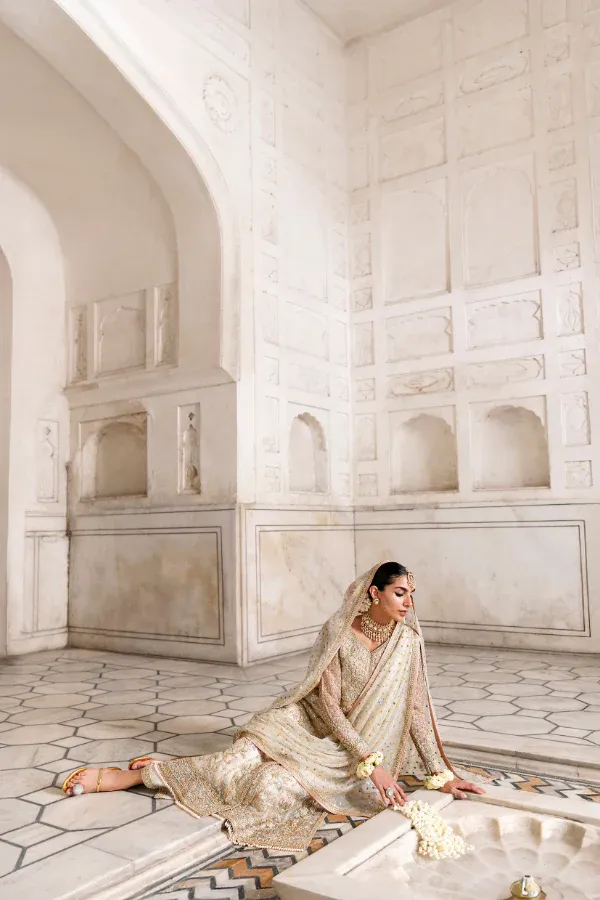
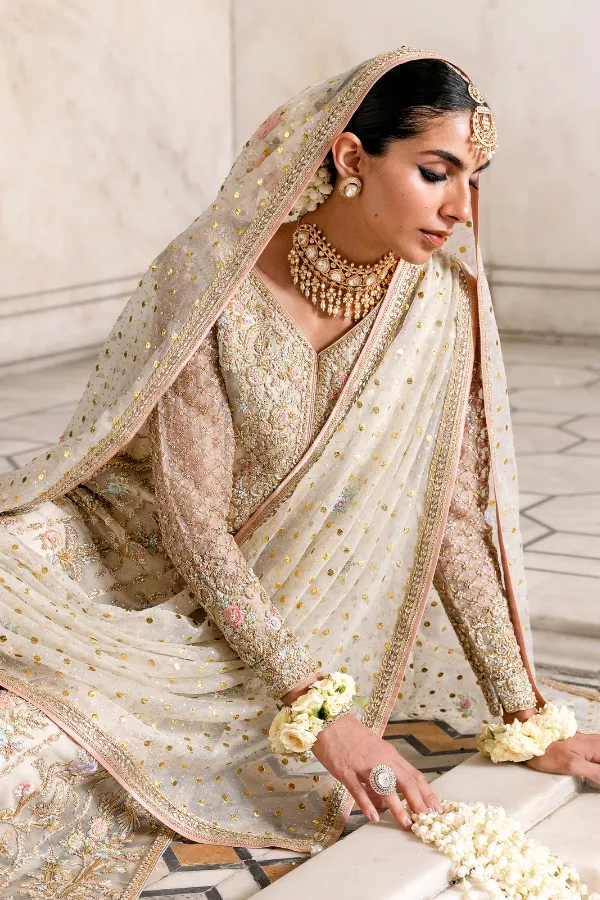
Some formal wear announces itself. This one arrives before you do. Hammad Bespoke Official’s mukaish work suit is built on pure net organza — ivory-champagne ground, blush-rose trim at every edge — with Sitara sequin scatter and Mukaish flat metallic wire work applied entirely by hand across the bodice, sleeves, and dupatta field. The result is a surface that moves with light rather than catching it.
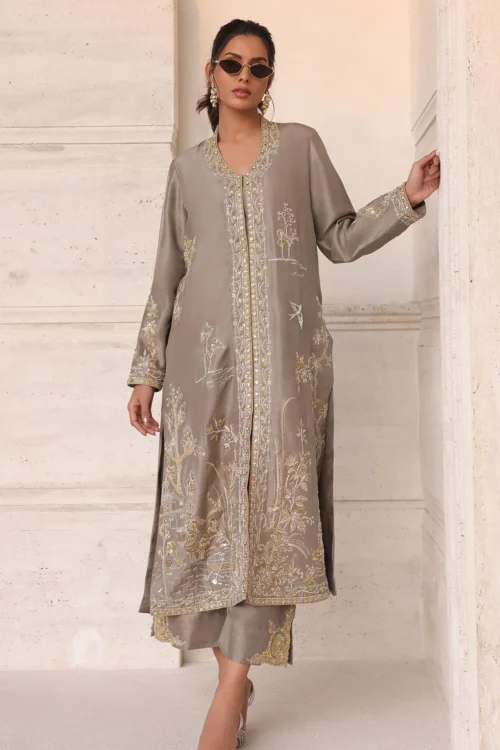
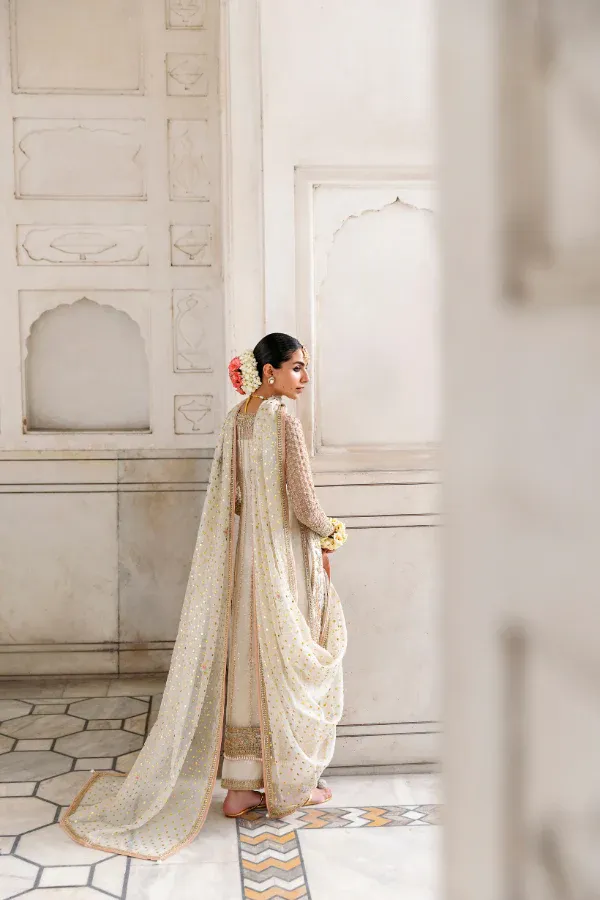
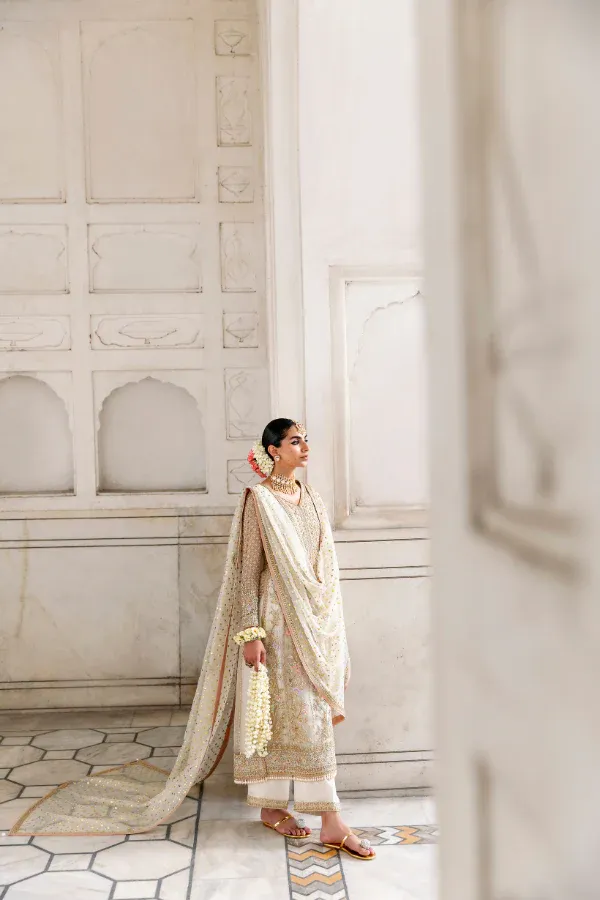
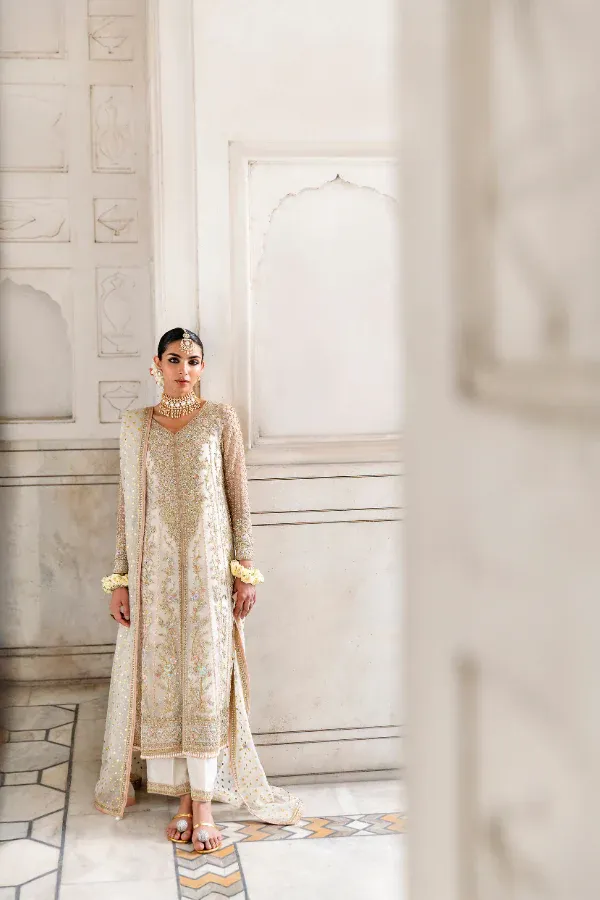
The silhouette is a front-open paneled shirt worn over a classic Azaar trouser. Floor-length in fall, structured at the shoulder, open at the front placket with the dupatta draped — this is Pakistani formal wear at its most composed. The secondary keyword here is intentional: this is a embroidered suit collection built on technique, not trend.
In this page:
Reading the ensemble — shirt, Azaar, dupatta
The shirt is a front-open paneled cut — not an Anarkali flare, not a straight kurta. The panels are constructed to fall clean from shoulder to hem, the front placket left deliberately open so the dupatta drapes in rather than sits on top. Embellishment runs heaviest at the yoke and cuffs, lighter through the body — a deliberate weight gradient that keeps the silhouette from reading as costume.
The Azaar trouser underneath is ivory-white, unembellished, cut wide enough to allow movement and narrow enough to stay precise at the ankle. The dupatta is sheer net organza — same ground as the shirt — with Sitara scatter across the field and Mukaish floral motifs at the border. When pinned at the shoulder it reads as a veil. Draped across both arms it reads as a train. Both are correct. Explore the full Pakistani formal wear range for related silhouettes.
The atelier’s craft
Mukaish wire work and Sitara embellishment — technique and origin
Mukaish work — also spelled Muqaish — is a form of hand-embellishment in which strips of fine metallic wire are inserted directly into fabric and twisted flat to create a low-profile, light-catching surface. Unlike Zardozi, which builds upward in relief, Mukaish stays flush with the ground cloth, producing a shimmer that reads as part of the fabric itself. Research into the evolution of Mukaish embroidery as a craft form traces its roots to the court ateliers of Awadh and the wider Mughal embellishment tradition. Sitara work — disc-cut sequins hand-set at specific intervals — is layered alongside the Mukaish wire to build contrast between the flat metallic field and the point-catch of each sequin.
At Hammad Bespoke Official, both techniques are applied by a single Master Artisan across the full three-piece set. The Multan atelier does not divide this work by station — one hand places every wire, every disc, from yoke to dupatta border. The floral motifs on the dupatta are mapped by hand before a single sequin is set. Nothing is transferred from a prior piece.
Bespoke customization and fit
Every mukaish work suit is constructed from your 37-point measurement profile — shoulder width, bust, waist, hip, shirt length, sleeve length, Azaar width and inseam — recorded through a guided WhatsApp consultation before cutting begins. The front-open paneled shirt requires precise shoulder and yoke measurement; a mis-set shoulder on this silhouette reads immediately. Nothing is cut from existing blocks. The Bespoke Fit Guarantee covers every order: if the garment does not meet your confirmed measurements on arrival, we remake. For diaspora customers in the USA, UK, and Canada, the consultation process is fully remote. If you are considering a floor-length anarkali dress alongside this suit for a wedding function, both can be commissioned in the same consultation.
Worldwide delivery and garment care
Crafting time for this mukaish work suit is 5 to 7 weeks from order confirmation. Every order ships insured and tracked from the Multan atelier — USA, UK, Canada, UAE, Saudi Arabia, and Australia. The three-piece set is packed in acid-free tissue inside a structured garment bag; the organza dupatta is folded flat, never rolled. For care: net organza should be dry cleaned only. Do not apply steam directly to Mukaish wire work — the metallic wire can distort under heat. Store the dupatta flat in the tissue layer it arrives in. WhatsApp us before any first cleaning if you are unsure of the process.
Frequently asked questions
What is Mukaish work and how is it different from Zardozi?
Mukaish work uses fine metallic wire inserted and twisted flat into the fabric ground — it sits flush with the cloth and produces shimmer without raised relief. Zardozi builds upward in dimensional goldwork. On this suit, Mukaish wire work is combined with Sitara disc sequins by a single Master Artisan at our Multan atelier. The result is a surface that catches light without adding weight to the net organza.
Can I order this mukaish work suit for delivery to the USA or UK?
Yes. Every order ships insured and tracked from our Multan atelier to your address in the USA, UK, Canada, UAE, and worldwide. Crafting time is 5 to 7 weeks. We recommend ordering 8 to 9 weeks ahead of your event date to allow buffer for the fitting confirmation stage.
Is the mukaish work suit suitable for Nikkah or Walima?
Yes — the ivory net organza ground, floor-length paneled shirt, and full organza dupatta make this suit a strong choice for both Nikkah and Walima. The colour reads ivory-champagne in daylight and shifts warmer under evening light. If you need a deeper or lighter ivory tone, or wish to adjust the blush-rose trim to another colour, both are available as bespoke options during your WhatsApp consultation.